The Katsina State Government says it has disbursed N3.61 billion to communities, resulting in the rehabilitation of more than 3,900 public facilities across the state.
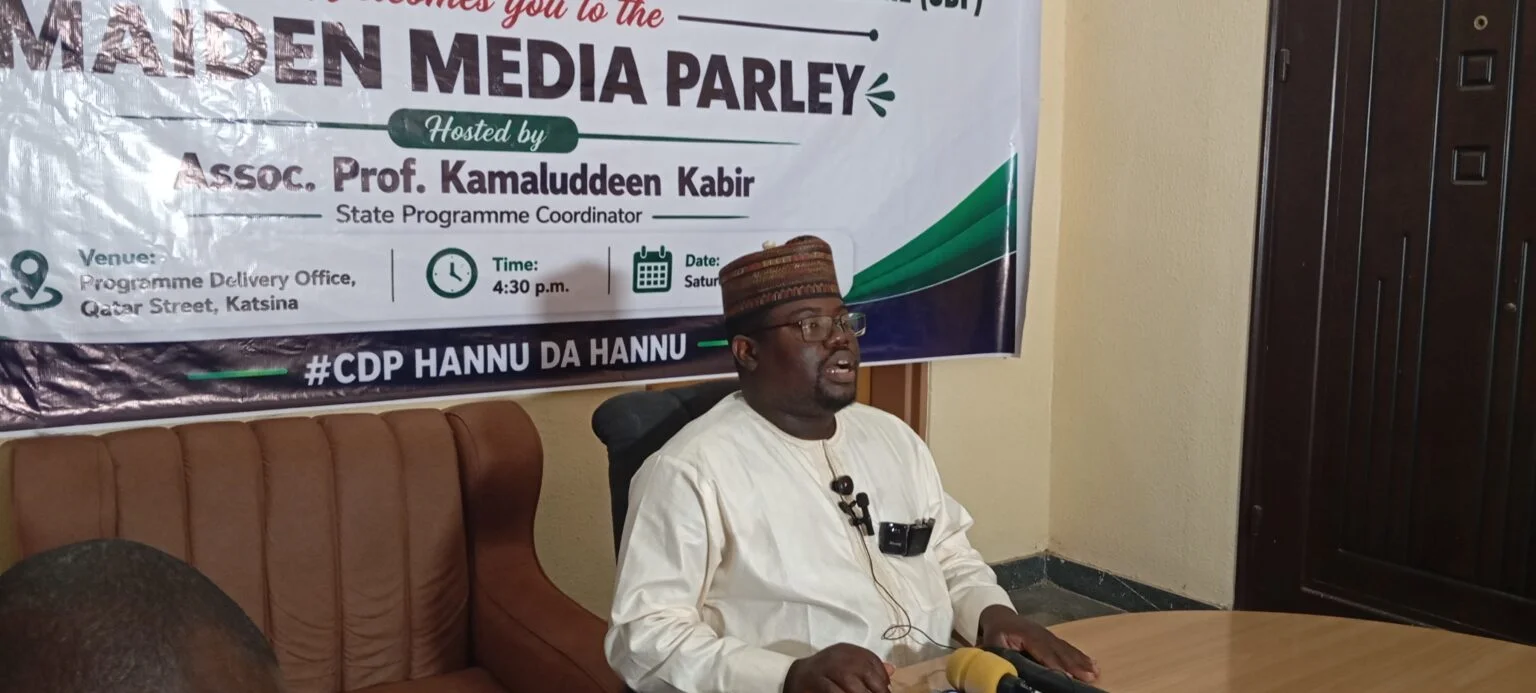
The State Programme Coordinator, Community Development Programme (CDP), Associate Prof. Kamaluddeen Kabir, disclosed this on Saturday during a maiden media parley in Katsina.
Kabir said the government released N10 million to each of the state’s 361 political wards to enable communities undertake development projects based on their identified priorities.
He said the funds were used to rehabilitate schools, renovate primary healthcare centres, restore water facilities, install solar-powered infrastructure and execute other community-based interventions.
“As of last month, the 361 communities have renovated and repaired more than 3,900 public facilities within their domains, while many more projects are ongoing,” he said.
According to him, several schools have been rehabilitated, primary healthcare facilities upgraded and abandoned water systems restored to service after years of neglect.
Kabir said the initiative, introduced by Gov. Dikko Radda, was designed to deepen grassroots development by allowing communities to identify, prioritise and execute projects that address their most pressing needs.
He explained that the programme operates through three implementation structures comprising the State Steering Committee, the Joint Planning Committee and Community-Level Committees.
The coordinator said the State Steering Committee, Chaired by the governor, provides policy direction and oversight, while the Joint Planning Committee, headed by the deputy governor, coordinates planning and implementation.
He added that each of the state’s 361 political wards serves as a development community with a 17-member Community-Level Committee responsible for identifying priorities, mobilising residents and validating projects.
Kabir said the committees were supported by three Community Development Officers in each ward, bringing the total number of field personnel to 1,083.
“The communities determine the projects they need and identify beneficiaries for government interventions because they understand their environment better than anyone else.
“Communities can easily identify genuine farmers, traders and vulnerable persons, making government interventions more transparent and effective,” he said.
Kabir further said that the programme had transformed the state’s budgeting process through ward-level town hall meetings.
He recalled that all the 361 wards submitted development priorities for inclusion in the 2026 budget, while consultations for the 2027 budget had also been concluded.
“The governor wants citizens to determine their priorities instead of the government making assumptions about what communities need.
“This ensures that projects implemented by the government reflect the real needs of the people,” Kabir said. (NAN)