The Federal Government has called for stronger partnership with Switzerland to expand women’s economic empowerment, strengthen protection for women and girls and promote women’s participation in leadership.
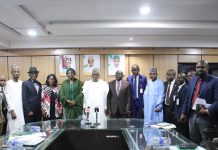
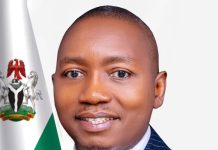
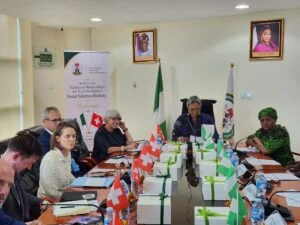
The Minister of Women Affairs and Social Development, Hajiya Imaan Sulaiman-Ibrahim, made the call during a meeting with the Head of Switzerland’s Federal Department of Home Affairs, Ms Elisabeth Baume-Schneider, in Abuja.
Sulaiman-Ibrahim said President Bola Tinubu’s Renewed Hope Agenda had made the protection of women and girls a national priority.
“Mr President’s agenda has prioritised women’s protection.
“It has elevated Gender-Based Violence (GBV) from a social issue to a critical matter of national security and economic stability,” she said.
The minister said the government was addressing GBV through prevention, women’s economic empowerment and survivor-centred support.
She said the number of sexual assault referral centres had increased from about 20 to nearly 50 across the country.
“It is not just about abuse; it is also about the support women receive.
“Psychosocial support is critical for women’s protection and well-being,” she said.
Sulaiman-Ibrahim said the Violence Against Persons (Prohibition) Act and the Child Rights Act were under review to strengthen protection for women and children.
She added that more than 40 guidelines and policy frameworks on adoption, safeguarding and child protection had been validated to improve service delivery.
The minister said the Renewed Hope Social Impact Intervention had been deployed across the 774 local government areas to strengthen childcare, legal aid and social protection.
She called for deeper collaboration with Switzerland in institutional capacity building, vocational training, financial inclusion and women’s economic development.
“We invite Switzerland to partner with us on strategic institutional capacity building.
“We can strengthen our gender data systems, co-invest in survivor-centred economic integration models and expand opportunities for women,” she said.
Sulaiman-Ibrahim said the government was also promoting opportunities for women in the digital, blue, green, creative and care economies.
She said women accounted for about 70 per cent of participants in agriculture but were yet to reap the full economic benefits of their contributions.
She added that the Nigeria for Women Programme has expanded from six pilot states to all states of the federation.
“Already, women have saved more than N8.9 billion through the programme.
“Our initial target is 4.5 million women, but we are already discussing how to scale up to about 20 million women,” she said.
The minister added that the government was implementing the National Action Plan on Women, Peace and Security to increase women’s participation in peacebuilding and decision-making.
Earlier, Baume-Schneider said Switzerland remained committed to supporting women’s economic autonomy because it was essential for sustainable development.
“We believe long-term well-being, prosperity and economic growth can only be achieved through gender equality,” she said.
She said Switzerland was promoting equal participation in the labour market, equal pay and measures to reduce the burden of unpaid care work on women.
Baume-Schneider also commended Nigeria’s efforts to improve women’s political participation through the constitutional review process.
“We take note with appreciation of the constitutional review process in Nigeria, particularly the efforts to strengthen women’s political participation through the Reserved Seats Bill.
“Switzerland supports this effort and, through our Embassy in Abuja, will continue to support civil society projects that promote women’s participation in politics,” she said.
She reaffirmed her country’s commitment to working with Nigeria to prevent violence against women and girls and expand opportunities for women.
“Like Nigeria, Switzerland will hold federal elections in 2027.
“One of our objectives is to increase women’s representation in parliament by encouraging more women to contest elections and supporting balanced representation,” she said.