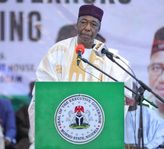
Prof. Adesoji Adesugba, an Investment Promotion and Economic Development expert, says rebuilding Nigeria’s textile industry require reforms in cotton production, power supply and financing before introducing stronger trade protection measures.
Adesugba, a Former Managing Director, Nigerian Export Processing Zone Authority (NEPZA/CEO) gave the advice in an interview with the News Agency of Nigeria (NAN) on Saturday in Abuja.
The interview focused on an effort to restore Nigeria’s textile manufacturing capacity.
Adesugba emphasised the need to introduce textile reforms before adopting stronger import restrictions to revive the nation’s textile industry.
He urged the Federal Government to prioritise competitiveness to drive sustainable growth in the textile industry.
He said that improving competitiveness would enable Nigerian manufacturers compete effectively within regional and global markets.
According to him, the textile industry previously operated about 167 mills and created employment for more than 500,000 Nigerians.
“Rebuilding the sector remained important for economic diversification and industrial development.
“It requires gradual reforms to strengthen Nigeria’s textile industry and sustainable competitiveness should precede import restrictions.
“Government need to prioritise competitiveness, infrastructure and local production, instead of an immediate textile import ban to revive the nation’s textile industry,” he said.
Adesugba recalled that Kaduna textile industry was once recognised as Nigeria’s leading textile hub with thriving manufacturing activities.
He noted that the industry’s contribution to the economy declined significantly over the years as many factories ceased operations.
He said reviving local textile production remained achievable through well-planned industrial reforms, while advising that available domestic production should first be expanded to meet increasing national demand.
According to him, an immediate import ban could create supply shortages before local factories attain sufficient production capacity.
“Moreover, policies should encourage increased investment in textile manufacturing across the value chain.
“Cotton production is one of the major areas that requires urgent attention. Moreover, electricity supply is very vital to the development of a nation’s industry” he said.
Adesugba highlighted stable electricity supply as critical to reducing production costs for manufacturers, while calling for improved access to affordable financing to enable factories modernise their equipment.
He advocated consistent industrial policies that would encourage long-term investments in manufacturing.
He said that predictable policies would strengthen investors’ confidence in Nigeria’s textile sector, adding that stronger border management would complement efforts to promote legitimate trade and local production.
Adesugba, also National Vice President, Nigeria Association of Chamber of Commerce, Industry, Mines and Agriculture (NACCIMA), noted that government’s intervention programmes had demonstrated commitment to supporting the textile industry.
He commended the Senate’s commitment to revitalising the textile industry and restoring jobs across the country, adding that more needed to be done to boost the industry.
The expert, however, emphasised the need for greater focus to addressing structural production challenges, while calling for collaboration among government, investors, farmers and manufacturers to rebuild and strengthen the industry.
According to him, sustainable industrial growth requires coordinated policies supporting production, investment and innovation.
Adesugba expressed confidence that consistent reforms would position Nigeria’s textile industry for renewed growth, employment generation and broader economic development. (NAN)