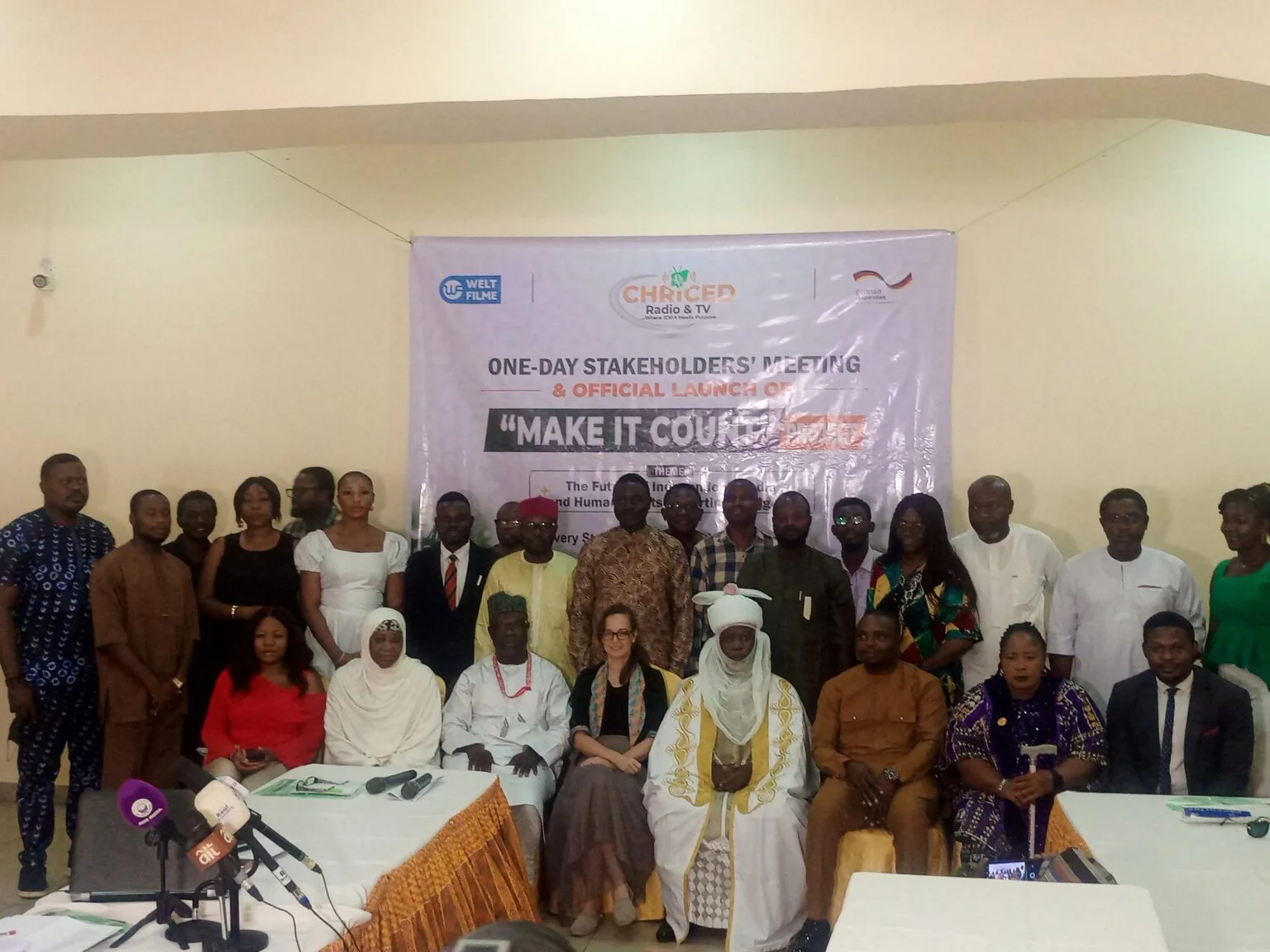
The Resource Centre for Human Rights and Civic Education (CHRICED) on Wednesday unveiled the “Make It Count” project aimed at strengthening independent media and promoting human rights reporting in Nigeria.
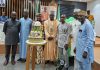
The project was unveiled at a stakeholders’ meeting in Abuja attended by media practitioners, civil society organisations, government representatives and development partners.
Speaking at the event, CHRICED Executive Director, Dr Ibrahim Zikirullahi, said the initiative was designed to empower journalists, citizen reporters and community storytellers to amplify the voices of ordinary Nigerians.
He said the project was a response to growing concerns over pressures on independent voices amid increasing public demand for transparency, accountability and respect for human rights.
“Today, we meet at a defining moment in our nation’s history when independent voices are increasingly under pressure, yet citizens are demanding greater transparency, accountability and respect for human rights.
“The ‘Make It Count’ Project is our contribution to building a stronger and more resilient media landscape that gives voice to women, youths, persons with disabilities and other marginalised groups,” he said.
Zikirullahi said the unveiling marked the beginning of a movement aimed at strengthening independent media, protecting citizens’ voices and promoting a future anchored on truth, justice and accountability.
“Democracy cannot thrive without a free press, human rights cannot be protected without fearless reporting, and development cannot be sustained without accountability,” he said.
He stressed that a free and independent media remained essential for democratic governance and the protection of fundamental rights, urging stakeholders to safeguard civic space and promote access to credible information.
Also speaking, the Executive Secretary, National Human Rights Commission (NHRC), Dr Anthony Ojukwu, described the meeting as timely.
Represented by the Director of Corporate Affairs, NHRC, Mrs Fatima Mohammed, Ojukwu said information and storytelling played critical roles in shaping public opinion and influencing responses to societal issues.
“Ethical storytelling has become a powerful tool for promoting human rights, social justice, accountability and sustainable development,” she said.
Ojukwu said the need for ethical and rights-based reporting had become more important as Nigeria continued to grapple with challenges such as insecurity, inequality, misinformation and shrinking civic spaces.
He noted that journalists and media practitioners remained indispensable partners in building a society that respects human rights and upholds democratic values.
According to her, the media is vital to sustainable development, noting that development cannot thrive where rights are violated, information is suppressed or citizens are excluded from governance.
In a keynote address on the theme, “The Future of Independent Media and Human Rights Reporting in Nigeria,” Owei Lakemfa, an activist, said both public and private media organisations faced different forms of influence that could affect editorial independence.
According to him, public media organisations are often constrained by government interests, while privately owned outlets may be influenced by the political and commercial interests of their proprietors.
“Media independence is relational. It is multidimensional. It is not something that is fixed,” he said.
Lakemfa added that although Nigeria’s media ecosystem remained vibrant, it faced persistent threats that required urgent attention to preserve democratic accountability and civic freedoms.
He called for stronger protection of press freedom, improved safety for journalists and greater commitment from stakeholders to safeguarding independent journalism in the country.