Nutrition acts as the foundational pillar for sustaining a healthy pool of voluntary, unpaid blood donors, nutritionists emphasise as Nigeria joins the world to mark World Blood Donor Day on Sunday.
The World Blood Donor Day is marked annually on June 14.
The global campaign with the 2026 theme, “One Drop of Humanity. Give Blood. Save Lives.”, highlights that humanity is at the heart of every blood donation.
According to the WHO, it reminds us that each donation is more than a medical act: it is a powerful expression of solidarity, compassion and collective responsibility
However, donor eligibility relies heavily on proper nutrition, which directly regulates crucial iron levels and hemoglobin production.
Medical stakeholders say that widespread nutrient deficiencies severely trigger donor deferrals.
As such, incorporating iron-rich foods into local diets is critical to ensuring donors can safely provide vital blood products.
While advancements have made transfusions safer, low-income settings continue to face acute blood shortages. Experts stress that pairing nutrition education with regular donor drives is essential to saving lives.
Mrs Ifeoma Onuoha, the C.E.O of MIC Food and Wellness Ltd, said blood donors should prioritise hydration, foods rich in iron, vegetables and vitamin C before and after blood donation.
The food and wellness therapist told the News Agency of Nigeria (NAN) in Lagos that there would be no healthy blood level without proper nutrition, noting that the body depended on good nutrition for its survival, boosting of immunity and disease prevention.
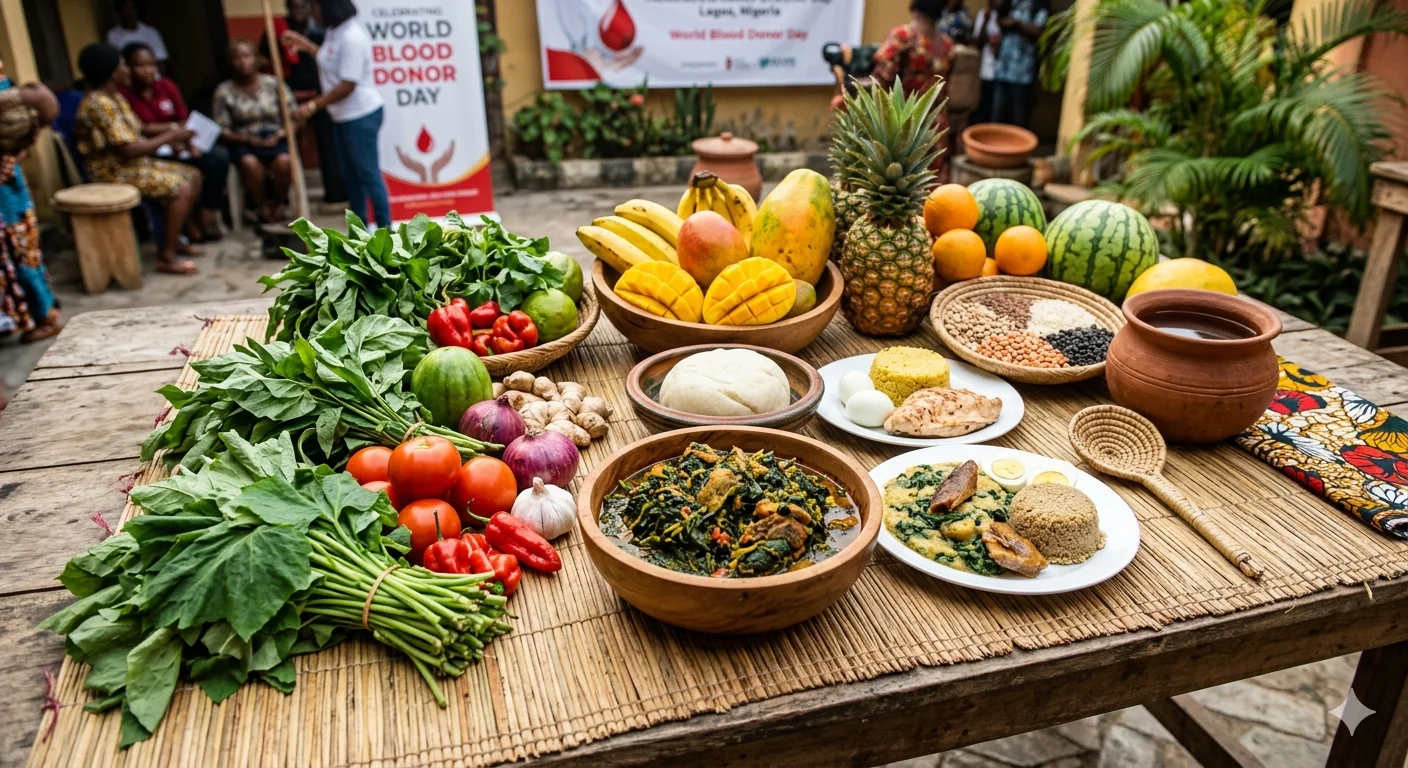
She said that to replenish blood after donation, individuals should depend fully on vegetables like fluted pumpkin, spinach and skinless poultry, lean beef, shrimps among others.
“Beyond the individual taking iron-rich foods, he or she must depend fully on foods rich in vitamin C, without Vitamin C, the body will not be able to absorb the iron-rich food”.
“Another thing is proper hydration, the blood is partly made of water. For a donor to have energy, the person must address the issue of proper hydration,” she said.
According to the nutritionist, vitamins B12 and B9 are key in blood formation, particularly the red blood cells and the hemoglobin.
She said that lean beef was the richest source of B12 and an essential nutrient in the formation of blood.
Onuoha noted that majority of Nigerian foods were rich and suitable for people with low iron level.
She recommended fluted pumpkins – “ugu”, legumes and local soups like Edikang Ikong, Afang and Efo Riro for persons with iron deficiency.
“We also have the heme iron which is protein gotten from chicken, liver, fish and egg yolk. These help to correct the low iron level”.
“Unripe plantain and grains like millet are good sources of iron, they are affordable Nigerian foods,” she said.
The wellness therapist emphasised the need to pay attention to the body in order to know when an individual was not getting enough blood-building nutrients and in need of blood.
She said going to the hospital to determine the blood level and ensuring proper nutrition were highly important.
She advised donors to do away with alcohol, fatty food, fried foods, and foods regarded as iron blockers, like caffeinated foods and over processed food, before and after blood donation.(NAN)