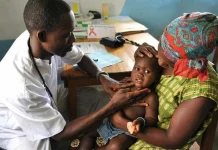
Nigeria has started local production of family planning commodities to improve access to reproductive health services and reduce dependence on imports.
Dr Samuel Oyeniyi, Head of Department, Family Health, Reproductive Health Division, Federal Ministry of Health and Social Welfare, disclosed this on Tuesday in Abuja.
He spoke during a maternal health panel session at the 2026 Joint Annual Review (JAR), with the theme ‘Together to Higher Grounds: Make the Data Count’.
Oyeniyi said increased investment and collaboration between government and development partners had supported the development.
“We have started local production of family planning commodities in Nigeria. The Coordinating Minister announced that we have started factory production for the first time,” he said.
He identified family planning as a major intervention contributing to improved maternal and newborn health outcomes, citing increased modern contraceptive use.
Oyeniyi said Nigeria’s modern contraceptive prevalence rate rose from 12 per cent in 2018 to 18 per cent, according to demographic and health survey data.
He said Nigeria required about 350 million dollars annually for family planning commodities and services, with government and development partners providing about 60 per cent.
He added that family planning had been prioritised under the Nigeria Health Sector Renewal Investment Initiative, alongside procurement, health worker training and service delivery.
Oyeniyi said the ministry was integrating family planning into maternal and child health services, including postpartum family planning and post-abortion care.
He said three service integration documents would be inaugurated during JAR, alongside efforts to harmonise the quantification and distribution of relevant health commodities.
Earlier, Dr Kelechi Ohiri, Director-General, National Health Insurance Authority (NHIA), said its maternal health interventions had expanded access to emergency obstetric care, neonatal services and obstetric fistula treatment.
Ohiri said the programmes had expanded from four facilities to 272 providing comprehensive emergency obstetric and newborn care.
He added that 15 facilities offered neonatal services, while 22 implemented the fistula-free programme.
According to him, women accessing emergency obstetric services increased from 19,270 at the programme’s launch in 2025 to about 53,000 in October 2026.
He said the neonatal programme also expanded from 646 beneficiaries during its pilot phase to approximately 11,000 newborns.
On fistula treatment, Ohiri said nearly 6,000 women had received care, including surgery, transportation, follow-up services and health insurance enrolment.
“Your first thing is to keep them alive. Save their lives first. Then ensure they have access to other care, because a human being is more than the condition they just presented with,” he said.
Ohiri said the authority was improving care quality through revised provider tariffs, facility accreditation, complaints tracking and measures against delays in emergency treatment.
He said the programmes would expand in 2027, with greater emphasis on quality services and nationwide coverage.
Speaking on Kano State’s experience, the Commissioner for Health, Dr Abubakar Yusuf, said maternal mortality declined by more than 30 per cent between 2023 and 2026.
Yusuf said recorded maternal deaths fell from 1,025 to 588, attributing the improvement to government, development partners and traditional and community leaders.
He said the state introduced community-based identification and referral of pregnant women, alongside engagement with religious and traditional leaders.
The approach also sought to address cultural barriers discouraging facility-based deliveries.
Yusuf said Kano had strengthened primary healthcare facilities, expanded emergency obstetric services and introduced clinical mentoring for health workers.
He added that more than 7,000 women had been successfully managed without developing complications following the interventions.
Also speaking, Dr Elijah Ogunsola, former Executive Secretary, Ogun State Primary Health Care Board, said maternal and newborn health interventions increased antenatal care attendance by six per cent.
Ogunsola said deliveries increased from 30,777 to more than 35,000, alongside expanded emergency transport services and community mobilisation.
He said community-based first responders had transported more than 7,000 pregnant women, while over 640 residents received training to encourage facility-based deliveries.
He added that vulnerable group enrolment in health insurance rose from 2.9 per cent to five per cent.
Enrolment under the Basic Health Care Provision Fund also increased from 3,000 to more than 40,000, he said.
Addressing financing challenges, Dr Bushrah Alam of the Global Financing Facility urged governments to protect domestic funding for reproductive, maternal, newborn and child health.
She said this was particularly important as development assistance declined.
Alam stressed that budgetary commitments must translate into actual expenditure reaching health facilities and intended beneficiaries.
She also urged states to fulfil their co-financing commitments under the Basic Health Care Provision Fund to strengthen emergency obstetric care programmes.
“By protection, what we mean is having a budget line for reproductive, maternal, newborn and child health, as well as family planning,” she said.
Alam called for development partner resources to be channelled through government budgets and aligned with national priorities under the Sector-Wide Approach.
Dr Mary Brantuo, WHO Country Office Nigeria’s Team Lead and Coordinator, Strategic Health Policy and Planning, said improved maternal health required adequate financing, integrated services and quality care.
Brantuo said skilled birth attendance remained a major challenge, with only about 50 per cent of Nigerian women accessing skilled birth attendants.
She called for stronger community health workers, improved clinical competence and more effective maternal, perinatal and child death surveillance.
She also advocated integrating sexual and reproductive health services into routine healthcare contacts.
The three-day review brings together Federal and state governments, development partners, civil society organisations and other stakeholders.
It is assessing health sector performance and progress under the 2023–2027 Health Sector Renewal and Universal Health Coverage Compact. (NAN)