The United Nations Refugee Agency (UNHCR) says about 66,000 Nigerians have fled to neighbouring countries this year as escalating violence deepens a cross-border humanitarian emergency.
The UN Refugee Agency (UNHCR) disclosed this on Tuesday, appealing for 11.4 million dollars to address the deepening humanitarian emergency affecting Niger, Nigeria and Republic of Benin.
UNHCR Director of External Relations, Dominique Hyde, raised the alarm during a press briefing at the Palais des Nations in Geneva, Switzerland, following a visit to Niger’s southeastern Diffa region.
Hyde said several hundred Nigerians had also sought refuge in Benin, underscoring the widening geographical consequences of insecurity and the increasingly desperate search for safety.
According to her, Niger already hosts more than 500,000 refugees and asylum-seekers, including approximately 327,500 Nigerians, placing enormous pressure on communities with limited resources.
She explained that most recent arrivals had settled in Diffa and Tahoua, two border regions already confronting insecurity, climate-related shocks and overstretched essential services.
In October alone, approximately 1,200 Nigerians crossed into Diffa, while another 3,400 entered Tahoua, adding to the growing humanitarian burden.
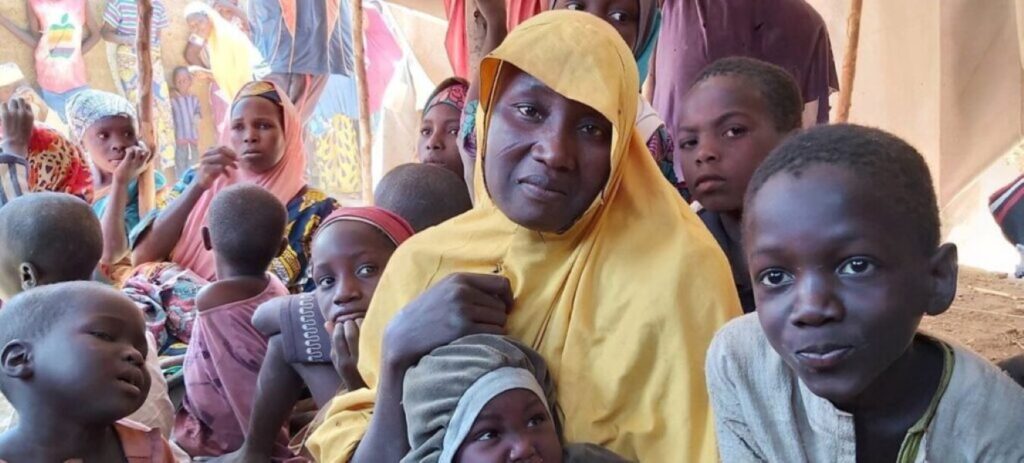
Hyde disclosed that more than 23,000 people had arrived in Diffa since January, with children accounting for over two-thirds of the new arrivals.
Dhe said many families were surviving in makeshift shelters without adequate food, clean drinking water, healthcare or access to education.
“With no nearby health facilities or schools, families are struggling to meet even their most basic needs,” she said.
She warned that humanitarian organisations were reporting severe malnutrition, respiratory infections and poor sanitation among displaced families, while funding shortages continued to undermine emergency assistance.
Hyde expressed particular concern over the vulnerability of newly arrived Nigerian refugees, many of whom had yet to receive the documentation needed to access essential services.
“Protection concerns are growing,” Hyde said, drawing attention to the vulnerability of newly arrived Nigerian refugees who had not been formally registered.
According to UNHCR, only about five per cent of Nigerian refugees who arrived in 2026 had been registered, exposing thousands to additional protection risks.
The agency identified education as another major concern, particularly because some refugee settlements lacked schools or transitional classes for children accustomed to Nigeria’s English-language education system.
Hyde said women were walking several kilometres to fetch water, while insecurity continued to threaten both displaced Nigerians and their host communities.
She explained that more than 70 per cent of Niger’s reported security incidents since January had occurred in Diffa, including armed attacks and violence against civilians.
The crisis had been compounded by drought and irregular rainfall, with grain production expected to be inadequate in approximately 700 of Diffa’s 1,000 villages.
UNHCR further estimated that about 70 per cent of pastureland had been lost, severely affecting livelihoods and increasing competition for scarce resources.
Hyde commended Nigerien authorities and host communities for providing temporary shelter and land, but warned that their capacity to accommodate increasing refugee arrivals was becoming overstretched.
She said UNHCR urgently required 11.4 million dollars to strengthen humanitarian assistance across Niger, Nigeria and Benin, including two million dollars for immediate lifesaving interventions.
The agency consequently appealed for international support to expand food, water, shelter, healthcare, refugee registration and protection services, warning that continued funding shortages threatened thousands of vulnerable families. (NAN)