Alternative
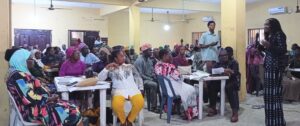
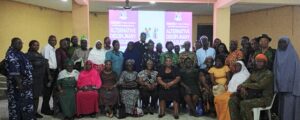
The Lagos State Government has trained 150 school administrators on non-violent disciplinary measures to protect pupils and promote safer learning environments.
The administrators, representing 150 primary and secondary schools in Education District 4, participated in the programme organised by the Lagos State Domestic and Sexual Violence Agency (DSVA).
The Executive Secretary of DSVA, Mrs Titilola Vivour-Adeniyi, said the initiative aimed to strengthen administrators’ capacity to correct pupils’ behaviour without corporal punishment.
Vivour-Adeniyi said the agency was not advocating the removal of discipline but promoting alternatives that avoided physical and emotional harm.
She cited cases of corporal punishment resulting in serious injuries, including an incident in which a child reportedly lost sight in the left eye.
According to her, the programme was informed by research highlighting consistency, predictability and clear rules in managing pupils’ behaviour.
She identified positive reinforcement, restorative justice, guided reflection, early counselling, behavioural contracts and peer mediation as effective alternatives.
Vivour-Adeniyi said the initiative aligned with the Lagos State Child’s Rights Law, global child protection standards and modern behavioural science.
She said the agency planned to extend the programme to two additional education districts before the end of 2026.
She added that the initiative would cover all six education districts in 2027.
Vivour-Adeniyi said follow-up visits would assess implementation in participating schools and ensure compliance.
She added that the Lagos State Task Force on Safeguarding and Child Protection Policy would support monitoring and evaluation.
The District Counsellor, Education District 4, Mr Festus Akinboni, said discipline should involve correcting children with love rather than inflicting pain.
Akinboni said corporal punishment could breed fear, anger and low self-esteem among pupils.
He said positive, non-violent approaches would promote character development and create safer learning environments.
Also speaking, Mrs Foluke Ademokun, Executive Coordinator, Ajoke Ayisat Afolabi Foundation, said research showed many school authorities knew corporal punishment was prohibited in Lagos.
Ademokun, however, said some administrators lacked adequate knowledge of appropriate alternatives.
She said effective discipline required problem-solving, fairness and consistency, urging teachers to understand the circumstances behind pupils’ behaviour.
She explained that some behaviours regarded as misconduct could stem from challenges at home or learning and developmental conditions.
Ademokun stressed the need for teachers to acquire basic counselling skills to identify and address underlying challenges.
She cited proximity control, which involves a teacher moving closer to a disruptive pupil, as another alternative to corporal punishment.
She urged parents and guardians to support teachers, describing discipline and child protection as shared responsibilities.
A teacher and educational consultant, Mrs Amelia Kentebe, welcomed the move away from corporal punishment, saying it could leave lasting psychological scars.
Kentebe said alternative disciplinary methods could correct pupils without harming or embarrassing them.
She added that such approaches could strengthen pupils’ confidence and trust in adults.
Successful implementation, she said, required greater commitment from both teachers and parents. (NAN)