Institutionalisation
The Prisoners Rehabilitation and Welfare Action (PRAWA) has called for stronger institutional ownership and sustainable implementation of non-custodial measures to strengthen Nigeria’s criminal justice system.
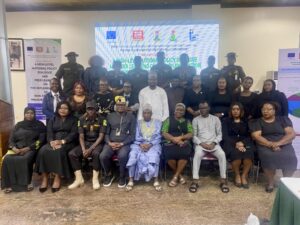
The PRAWA Board Chairman, Mr Chris Enenya, made the call at a high-level national policy dialogue and peer learning on the implementation of non-custodial measures in Nigeria on Wednesday in Abuja.
The News Agency of Nigeria (NAN) reports that the event is organised by PRAWA and supported by the Rule of Law and Anti-Corruption in Nigeria (RoLAC II) Programme, implemented by International Institute for Democracy and Electoral Assistance (IDEA).
The dialogue had as theme ”From Practice to Policy: Strengthening the Effective and Sustainable Implementation of Non-Custodial Measures in Nigeria”.
Enenya noted that the effectiveness of non-custodial measures depended not only on legal provisions, but on the ability of justice sector institutions to translate them into consistent, effective and accountable practice.
He said successful implementation required judicial confidence, competent practitioners, effective supervision by correctional officers, institutional coordination and community support.
Enenya noted that PRAWA’s work had increasingly focused on addressing the gap between legislation and practice, particularly through the Advancing Implementation of Non-Custodial Solutions (AI-NCS) project under the RoLAC II programme.
He said the project had worked with justice sector institutions across eight focal states to strengthen capacity, promote practical engagement and support the development and use of institutional tools.
According to him, the project also strengthened parole structures, improved supervision practices and encouraged collaboration across the criminal justice chain.
He said it supported the development and review of practice directions, sentencing tools and templates, as well as improved supervision of probation, suspended sentences and community service.
”Significantly, we have witnessed the first statutory parole releases under the Nigerian Correctional Service (NCoS) Act 2019.
”10 persons were released on parole in Abia, with tailored livelihood support provided to facilitate their reintegration into society,” Enenya said.
He however said the experience showed that institutional change required more than training and legal frameworks.
”Training is important, but training alone does not institutionalise practice. Legal frameworks are essential, but a framework requires institutional confidence and operational systems behind it,” he said.
Enenya urged stakeholders to view the dialogue not merely as a closing event for the project, but as a transition from project-supported interventions to stronger institutional ownership.
The Controller-General of NCoS, Sylvester Nwakuche, represented by the Assistant Controller-General in charge of Non-Custodial Measures, Dabit Timothy, called for greater adoption of non-custodial sentences in appropriate cases.
Nwakuche appreciated stakeholders, particularly the judiciary and development partners, for their support toward advancing non-custodial measures, while reaffirming the commitment of the NCoS to public safety and the dignity and human rights of persons in conflict with the law.
The Executive Director of PRAWA, Dr Uju Agomoh, emphasised the need for stronger coordination and collaboration among justice sector institutions to ensure the effective and sustained implementation of non-custodial measures.
Agomoh cautioned against viewing non-custodial measures solely as a means of reducing the cost of maintaining custodial facilities, noting that overcrowding, pressure on correctional personnel and negative influences associated with prolonged incarceration also had wider social costs.
She urged stakeholders to build on existing progress, saying the evolution of non-custodial measures required legislation, institutional commitment, operational systems and sustained collaboration.
A representative of the Federal Ministry of Justice, Ruqayya Kida, said the Federal Government recognised non-custodial measures as an essential component of ongoing justice sector reforms.
Also, Dr Toyin Badejogbin, Project Manager, Criminal Justice Reform, RoLAC II Programme, called for a strong community of practice involving justice sector institutions and other stakeholders to support the NCoS.
Badejogbin said the network could advocate for adequate funding and ensure that resources allocated to non-custodial measures were released and properly utilised.
He said the community of practice was one of the outcomes of the project and would strengthen collaboration and institutional ownership of the reform agenda.
He urged stakeholders to critically examine the sustainability of the reforms and develop practical strategies to consolidate the gains, adding that international IDEA remained committed to supporting democratic institution-building, inclusive public systems, dialogue and experience-sharing.
He appreciated the European Union for its support to the programme, noting that its contribution extended beyond financial assistance to include oversight and monitoring of interventions.(NAN)