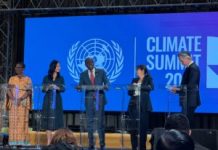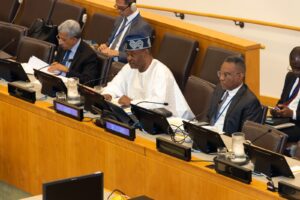
Chairman of the UN Administrative and Budgetary Committee, Amb. Jimoh Ibrahim, has called for continuous reform of the United Nations, saying institutional change must not end with the current UN80 initiative.
Ibrahim Nigeria’s Permanent Representative to the UN, spoke after presiding over the Committee’s opening meeting for the 81st General Assembly session.
He said reform featured prominently in interventions by several delegations during Monday’s deliberations.
“Reform must be continuous; it shouldn’t be a one-off. We have the UN80 reforms already. What countries are saying is that, that should not be the end,” he said.
The Nigerian diplomat cited interventions from the United States, India, Mexico, Barbados and other Member States calling for sustained institutional improvement.
He said the Fifth Committee would examine reform alongside accountability, efficiency and the structure of the organisation.
He also said concerns had been raised about what some member states considered a heavy top structure within the UN system.
“The top level is very heavy,” he said, referring to concerns raised during the meeting, adding that the questions would be examined in the interest of fairness and administrative efficiency.

The Chairman also identified accountability and trust as essential to successful reform.
“A lot will be done in respect of accountability and the issue of trust,” Ibrahim said.
He emphasised the need for confidence among member states and between governments and the UN system.
He noted that Nigeria’s experience with reforms under President Bola Tinubu had strengthened his conviction that reforms must be sustained.
“You know I am a student of reform from President Bola Tinubu. The Nigeria reform is also the catalyst for the reform of the United Nations budget and administration,” he said.
The envoy said the transition to a new UN leadership should not interrupt the reform process.
According to him, whoever succeeds the current Secretary-General must continue efforts to make the organisation more efficient and accountable.
“A new secretary-general will be elected or appointed, and that means he or she must not stop the reform. Reform must be continuous,”Ibrahim added.
He said the fifth committee would therefore approach its work not merely as an annual budget exercise, but as an opportunity to improve how the organisation managed resources.
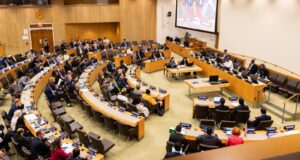
The committee is responsible for administrative and budgetary matters and plays a central role in determining how the UN funds its mandates and operations.(NAN)