The Minister of Information and National Orientation, Mohammed Idris, says the ultimate goal of President Bola Tinubu’s administration is to ensure that the benefits of the Federal Government’s reforms reach ordinary Nigerians.
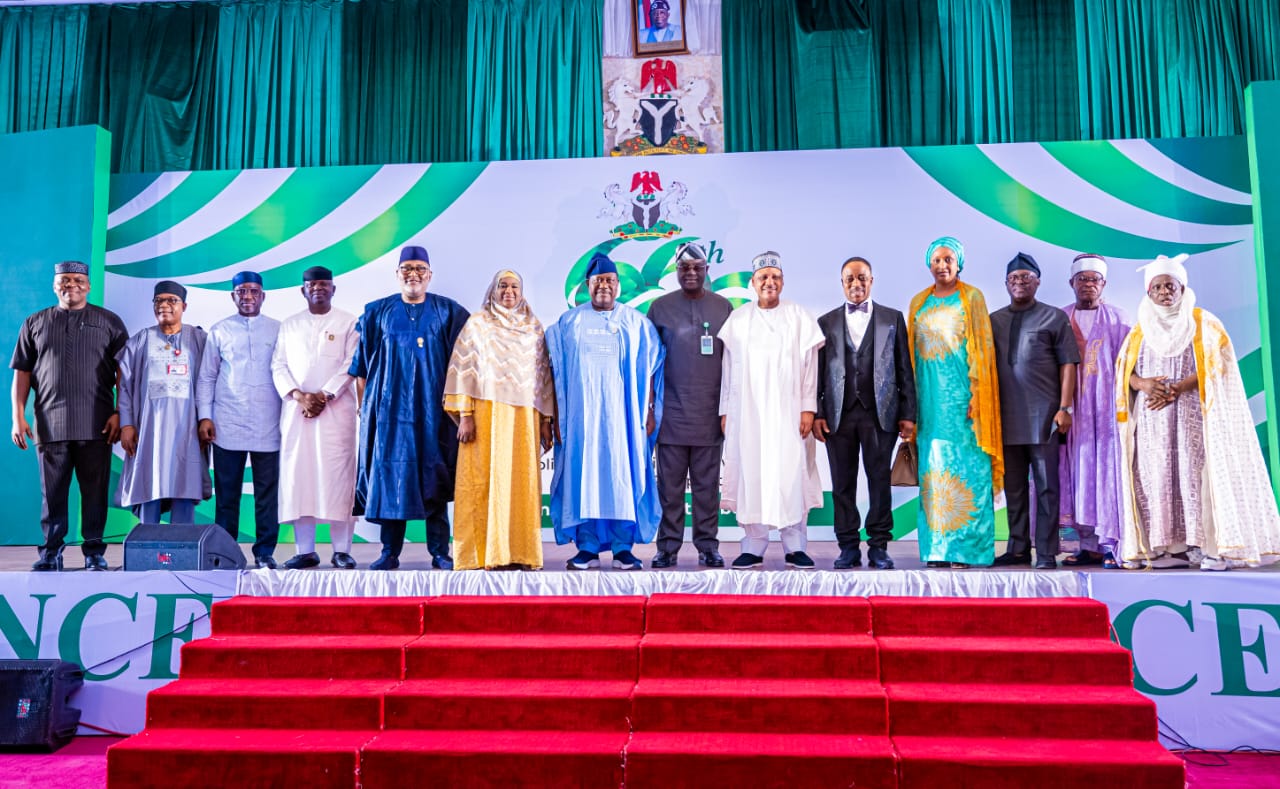
Idris stated this on Wednesday in Abuja at the Independence Day Public Lecture organised to commemorate Nigeria’s 66th anniversary.
The theme of the lecture was “From Reforms to Stability: Consolidating Nigeria’s Renewed Hope for Shared Prosperity.”
Idris said the theme was particularly significant as the country continued its journey toward economic stability, growth and national prosperity.
He recalled that 66 years ago, Nigeria’s founding fathers and heroines assumed the responsibility of building one nation from the country’s remarkable diversity.
According to him, the founding generation believed that Nigerians, in spite of their differences, could forge a common destiny.
“Today, that baton is in our hands,” Idris said, adding that every generation had a responsibility to contribute to the development of the country.
He said President Tinubu currently held the baton of leadership and had the responsibility of steering Nigeria through necessary reforms toward stability, growth and shared prosperity.
The minister acknowledged that the reforms implemented over the past three years had not been easy for Nigerians.
He said the reforms had demanded sacrifice and patience, while also beginning the process of correcting longstanding structural weaknesses in the economy.
Idris said the reforms were intended to lay stronger foundations for Nigeria’s economic future and create conditions for sustainable development.
“The goal of President Tinubu is that the benefits of reform reach ordinary citizens,” he said.
He said there were encouraging signs in the economy, including reported growth in gross domestic product, expanding domestic refining capacity and increasing investment in critical sectors.
Idris also said major infrastructure projects were progressing across the country as part of efforts to improve economic activities and national development.
He said the government’s objective was to transform reform into stability, stability into growth and growth into shared prosperity.
“Our goal is clear: to turn reform into stability, stability into growth, and growth into a new era of shared prosperity in which every Nigerian can aspire, work and prosper,” he said.
Idris stressed that government could not achieve the objective alone, saying the private sector, media, civil society, traditional and religious institutions, academia and citizens all had important roles to play.
He particularly highlighted the role of the media in promoting informed public discourse and strengthening national cohesion.
The minister said the responsibility of the media was especially important as Nigeria approached another electoral cycle.
He urged journalists and media organisations to anchor public discourse on facts, verification and national cohesion.
Idris said political differences were legitimate in a democracy but should not diminish Nigerians’ shared national identity.
He described Nigeria at 66 as a continuing project in which every generation received the national baton, ran its course and passed it to the next generation.
“Our responsibility today is to move Nigeria further along the road to prosperity, security and national unity,” he said.
He, therefore, urged Nigerians to renew their faith in the country and their commitment to building a nation that would serve the interests of all citizens.
In his keynote address, the Secretary to the Government of the Federation, Sen. George Akume, called on Nigerians to honour those who laid the foundation of the country while working to build a better future.
Akume said the country owed it to past generations and future generations to build a Nigeria capable of realising its enormous potential.
He said the administration envisioned a Nigeria where young graduates could become employers of labour, farmers could feed their families and sell surplus produce, and entrepreneurs could expand small businesses into thriving enterprises.
“We as leaders envision a Nigeria where a young graduate becomes an employer of labour; where a farmer can feed his family and sell surplus at market; where an entrepreneur can turn a small shop into a thriving enterprise,” he said.
Akume added that the government also envisaged a country where every child could attend a good school and access medical care when sick.
He said achieving those objectives would require sustained reforms and collective efforts by government and other stakeholders.
“We know the path will not be easy but our goal is clear: shared prosperity for all Nigerians,” Akume said.
He said the administration would continue to invest in education, infrastructure and healthcare while seeking to ensure that economic growth generated real opportunities for Nigerians.
Akume said the administration took difficult decisions after assuming office in 2023, including the removal of petrol subsidy, unification of the foreign exchange market and tax and other fiscal reforms.
According to him, the decisions were necessary to rebuild economic stability, although their implementation had imposed difficulties on citizens.
He said the task before government was now to ensure that economic growth translated into jobs, higher incomes and improved living conditions.
Akume also highlighted infrastructure development, including the Lagos-Calabar Coastal Highway, Abuja-Kano highway and East-West Road, as projects intended to improve connectivity and facilitate the movement of people and goods.
He said improved road networks would enable farmers to access markets, businesses to transport goods more efficiently and citizens to travel more safely.
The SGF said the government was also modernising rail and port infrastructure to improve the movement of people and goods across the country.
He said the real estate sector was receiving attention through expanded mortgage finance, which he said could support home ownership while creating employment opportunities.
Akume also highlighted government efforts in the power and transport sectors, including investments in electricity infrastructure and the promotion of Compressed Natural Gas (CNG) as an alternative fuel.
He said more than 120,000 vehicles had been converted to CNG, with more than 400 conversion centres and 90 fuelling stations established nationwide, according to figures presented at the event.
He said CNG buses were helping to provide alternative transportation options and reduce costs for commuters.
Akume said the government would continue to promote cleaner and cheaper alternatives rather than return to what he described as the previous petroleum subsidy regime.
Also speaking, Mr Olumuyiwa Enitan, the Head of the Civil Service of the Federation, said the Nigerian Education Loan Fund had expanded access to tertiary education financing.
Enitan said the initiative was creating opportunities for young Nigerians to acquire higher education and relevant skills needed for employment and economic participation.
He said agricultural interventions were also being implemented to increase food production, strengthen value chains and improve farmers’ access to inputs, finance and markets.
The Head of Service said housing and social protection programmes were similarly being deployed to support vulnerable citizens and strengthen household resilience.
He said the proposed Renewed Hope Plan 2026–2030 was designed to consolidate ongoing reforms through a medium-term framework focused on job creation, human capital development, infrastructure, food security and social protection.
Enitan said the framework was also intended to support Nigeria’s long-term development aspirations under Nigeria Agenda 2050 and the government’s objective of building a $1 trillion economy by 2030.
He said the Federal Civil Service had a central role in ensuring that government policies were effectively implemented and programmes produced measurable results.
According to him, the service was undergoing transformation aimed at making it more efficient, productive, professional, accountable and citizen-centred.
He said the government was strengthening performance management, accelerating digitisation, promoting continuous learning, deepening accountability and encouraging innovation in public service delivery.
Enitan, however, acknowledged that challenges remained, including cost-of-living pressures, unemployment and underemployment.
He said the next phase of the reform process should therefore focus on consolidating fiscal, economic and public-sector reforms while ensuring that economic growth translated more directly into improved household welfare.
He called for greater transparency, accountability and prudent resource management, as well as an environment that would enable businesses to invest, produce, innovate and create employment.
Enitan also stressed the need to build public institutions that were professional, responsive and digitally enabled, and anchored on merit, integrity and accountability.(NAN)