Envoy calls for shift from diplomatic meetings to economic action
Economy
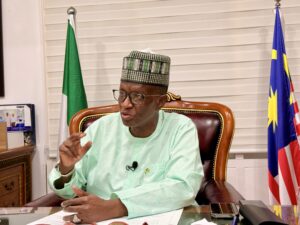
Nigeria’s High Commissioner to Malaysia, Amb. Ahmed Sulu-Gambari, has called for stronger economic diplomacy to translate Nigeria-Malaysia relations into concrete trade, investment and development outcomes.
Sulu-Gambari made the call in an interview with the News Agency of Nigeria (NAN) on the sidelines of the Malaysia International Halal Showcase (MIHAS) 2026 in Kuala Lumpur.
He said that Nigeria could learn from Malaysia’s approach to supporting businesses and penetrating international markets.
The envoy, who assumed duty in Malaysia in July, described the Malaysian economy as vibrant offering lessons for Nigeria in building stronger business and export ecosystems.
“Malaysia has a very vibrant economy. It is a team for Nigerians to learn from and try to promote collaborations between the Nigerian and Malaysian business communities,” he said.
Sulu-Gambari also identified the Halal economy as one area where Malaysia had developed significant expertise, noting that its application had expanded beyond food to beverages, technology, cosmetics, pharmaceuticals, healthcare and tourism.
He said Nigeria could draw lessons from Malaysia’s approach to supporting businesses through government policies, financial institutions and educational institutions.
“The area that we could tap into is to study how they penetrate the international market,” he said.
According to him, access to financing and institutional support had helped Malaysian businesses expand their activities and reach international markets.
He said Nigeria needed to strengthen similar support systems while creating greater confidence among Malaysian businesses interested in investing in the country.
Sulu-Gambari said attracting more Malaysian companies to Nigeria was one of the areas the Mission was pursuing.
“Malaysia has been engaging Nigeria in oil, electronics and petroleum businesses. It is our duty to increase the number of Malaysian companies in Nigeria,” he said.
The high commissioner said the mission had also been engaging Malaysian authorities and business stakeholders on opportunities available in Nigeria.
He cited a recent webinar involving the Nigerian Mission in Malaysia and the Malaysian High Commission to Nigeria, Aiyub Omar which focused on investment opportunities and ways of creating an enabling environment for Malaysian businesses.
He acknowledged that security concerns remained among issues raised by potential Malaysian investors but said Nigeria offered opportunities that could be explored in spite of the existing challenges.
“I would try to allay their fear that yes, we might be having some hiccups of challenges here and there, but the challenges are not unsurmountable in Nigeria,” he said.
Sulu-Gambari added that Nigeria had the market, investment opportunities and government policies required to support businesses, adding that diplomatic engagement should help connect foreign investors with those opportunities.
He called for stronger communication between Nigerian diplomatic missions and relevant authorities at home to ensure that opportunities identified abroad translated into concrete action.
“My own suggestion as a diplomat is to establish a good, credible line of communication so that when we see things that could be of benefit to Nigeria, we should know where to report it to,” he said.
He stressed that diplomatic engagements should go beyond meetings and rhetoric to produce measurable outcomes for Nigeria.
“The world is moving from rhetorics of meetings in and out. These meetings to action, what are the benefits, the direct, derivable benefits to Nigeria,” he said.
Sulu-Gambari said the mission would continue to work with Malaysian authorities, businesses and institutions to strengthen bilateral economic relations and expand opportunities for Nigerian and Malaysian businesses.
NAN reports that Nigeria and Malaysia established diplomatic relations in 1960, with the two countries maintaining cooperation in areas including trade, investment, education, energy, and people-to-people relations.(NAN)