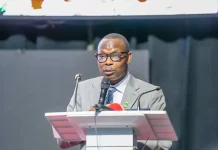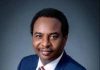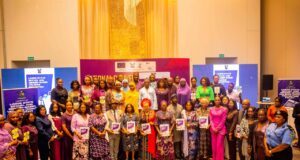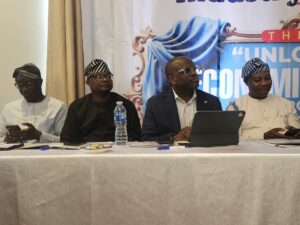
Dr Segun Obayendo, Technical Adviser to the Vice President on Transportation, Logistics and Innovation, says Nigeria must unlock its economic potential by fixing structural gaps in the sector.
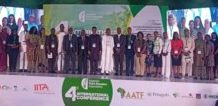
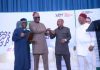
Obayendo said this while giving the keynote address at the 2026 Transport Industry Summit, organised by the Transport Correspondents Association of Nigeria (TCAN) on Thursday in Lagos.
He identified delays, fragmented transport modes, multiple checkpoints, insecurity, poor coordination and informality as weaknesses and factors significantly increasing the cost of doing business.
According to him, Nigeria should learn from Singapore, Germany and China, where integrated transportation systems, technology and infrastructure support broader economic development and efficient movement.
“Nigeria needs to move beyond constructing individual transport projects towards creating a multimodal system where roads, railways, waterways and ports complement one another.
“When you have one ticket, you should be able to book your journey across the different modes. That is what multimodality is talking about,” he said.
The technical adviser cited Hamburg in Germany, where digital systems integrate road, rail and maritime operations, adding that Nigeria needed technology capable of tracking cargo and monitoring goods movement.
Obayendo also cited China’s development, arguing that strong transportation infrastructure and connectivity had supported the country’s capacity to produce goods and distribute them domestically and internationally.
He said that inefficient transportation costs were ultimately transferred to consumers and businesses through higher freight charges, delays, informal payments and increased prices of imported and locally produced goods.
The presidential adviser advocated stronger integration of road, rail and waterways, noting that combining different modes could significantly reduce travel time and improve the efficiency of cargo movement.
He said that the Nigeria’s National Land Transport Policy provided an important framework for coordinating transport development, ensuring continuity and reducing fragmentation across institutions and successive administrations.
Obayendo also called for professionalism in road transport, formalisation of operators, improved terminals, expanded Compressed Natural Gas infrastructure and stronger collaboration among government agencies to address insecurity, crashes and infrastructure vandalism.
Mr Mohammed Bala, the National Secretary-General, Association of Maritime Truck Owners (AMATO), said that weaknesses in Nigeria’s transportation sector required urgent intervention.
Bala identified indiscriminate truck parking, inadequate marshalling yards, illegal checkpoints, extortion and insufficient logistics infrastructure as major challenges confronting the sector.
He also cited weigh bridge challenges and high operating costs, stressing the need for stronger digitalisation and improved port and road infrastructure.
“There is need for CNG palliatives for heavy-duty trucks and coordinated action to create an efficient logistics system,” Bala said.
Similarly, Mr Raymond Gold, the National Public Relations Officer, Waterfront Boat Owners and Transporters Association of Nigeria (WABOTAN), said that economic growth through logistics required cooperation among all transport modes.
Gold said that the four transport modes should be regarded as partners rather than operating as separate and parallel systems.
He said that the water transport was largely untapped, hence, urging government to dredge waterways to ensure safe and navigable channels across the country. (NAN)