The Minister of State for Health and Social Welfare, Dr Iziaq Salako, has called for collective action to end the maternal mortality crisis in the country.
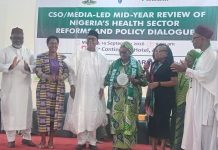
Salako made the call on Monday in Abuja during the unveiling of the Incentives to Increase Maternal and Newborn Care Services Utilisation in Nigeria (INSEMN).
He said every Nigerian woman faced about a one-in-19 lifetime risk of dying from pregnancy-related causes.
The minister underscored the urgent need to improve access to quality maternal and newborn healthcare services.
According to him, the situation remained unacceptable, particularly when compared with developed countries where the lifetime risk of dying from pregnancy-related causes was about one in 4,000.
Salako said Nigeria accounted for about 39 per cent of global maternal deaths, making the reduction of preventable maternal and newborn deaths an urgent national priority.
He said the Federal Government had responded through targeted interventions, including the Maternal and Neonatal Mortality Reduction Innovation Initiative (MAMII), launched by President Bola Tinubu in November 2024.
He said MAMII was designed to accelerate efforts to reduce maternal and neonatal deaths by focusing interventions on high-burden local government areas and strengthening access to timely and quality care.
According to him, the initiative was being implemented in 172 local government areas across the 36 states, with more than 250 health facilities participating in states including Bauchi, Borno, Kaduna, Kano and Katsina.
Salako said more than 32,000 women and 1,700 newborns had so far benefited directly from emergency obstetric and newborn care services under the initiative.
He added that mentorship and emergency medical services had reached nearly 79,000 beneficiaries, with pregnant women accounting for about 60 per cent of those transported to healthcare facilities.
The minister said the intervention was already producing encouraging results, with fourth-visit antenatal care attendance increasing by 20 per cent in one quarter in MAMII implementing local government areas.
He said the Federal Government was targeting a 30 per cent reduction in maternal mortality and a 20 per cent reduction in neonatal mortality by 2033.
He said the broader ambition was to reach between 2.3 million and 2.9 million pregnant women with free, timely and comprehensive maternal and newborn care.
Salako said the flag-off of INSEMN represented another deliberate step towards ensuring that more women registered for antenatal care early, delivered in health facilities and returned for appropriate postnatal care.
“Help continues to come, and help is very close, and it is coming faster than ever,” he said.
He urged Nigerians to support efforts aimed at ensuring that no woman lost her life while giving birth.
Salako said the government could not achieve the desired reduction in maternal and newborn deaths without the support of development partners.
He acknowledged the contributions of the World Health Organisation (WHO), UNICEF, UNFPA, Global Financing Facility (GFF), USAID and other partners.
He also acknowledged the contributions of the First Lady, Sen. Oluremi Tinubu, to maternal and newborn health initiatives.
According to him, the First Lady had supported the distribution of professional kits to midwives across the six geopolitical zones and the training of 120,000 frontline health workers.
He added that the First Lady had championed the “Free to Shine” campaign aimed at eliminating mother-to-child transmission of HIV, syphilis and hepatitis, among other projects, through the Renewed Hope Initiative.
Salako said the support had also helped mobilise more than N100 billion for vulnerable women, children and families.
The minister said the administration remained committed to building a health system where women could access quality care without financial, geographical or other barriers.
He stressed that the goal was not merely to increase the number of women reaching health facilities but to ensure that they received timely, skilled, respectful and life-saving care.
He said the new INSEMN intervention would complement the efforts by encouraging greater utilisation of available maternal and newborn health services.
Salako said the ultimate objective was to ensure that pregnancy and childbirth no longer became life-threatening experiences for Nigerian women.
The News Agency of Nigeria (NAN) reports that the latest intervention comes against the backdrop of continuing efforts by the Federal Government to strengthen MAMII and address preventable maternal and newborn deaths.
Recent government data show that emergency response under national maternal health interventions has expanded, with emergency medical services supporting the transportation of tens of thousands of beneficiaries to healthcare facilities.
MAMII is currently being used as a key framework for concentrating interventions in high-burden areas, while efforts are also being made to strengthen referral systems, frontline health workers and emergency obstetric services. (NAN)