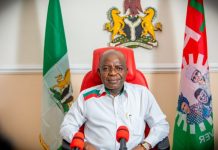
The African Regional Organisation of the International Trade Union Confederation (ITUC-Africa) has urged the Kenyan Government to protect migrant traders from discrimination, intimidation and violence.
This is contained in a statement signed and issued by Mr Joel Odigie, General Secretary of ITUC-Africa, on Thursday in Abuja.
Odigie said recent remarks by Kenyan President William Ruto concerning foreign nationals engaged in small-scale trading had generated anxiety among migrant communities.
He warned that political rhetoric portraying Africans as unwanted foreigners could legitimise discrimination, profiling, harassment and violence, particularly amid unemployment and economic hardship.
“Political statements that distinguish Africans as unwanted foreigners can quickly legitimise discrimination, profiling, harassment and ultimately violence,” Odigie said.
He acknowledged Kenya’s right to regulate employment, immigration and commercial activities, but urged the government to enforce its laws fairly and without stigmatising entire communities.
“Economic hardship must not be explained through nationality, nor should migrant workers and African traders become convenient scapegoats for structural problems,” he said.
Odigie said exclusionary rhetoric could undermine Africa’s continental integration agenda, including the African Continental Free Trade Area (AfCFTA), which promotes intra-African trade.
He urged governments to rely on evidence and enforce laws individually, rather than respond to concerns about foreigners by criminalising or stigmatising entire communities.
“Africa is one. Africans must not become strangers to one another on their own continent,” Odigie said.
He called on Kenya to ensure that all enforcement measures were lawful, proportionate and non-discriminatory, while protecting migrant workers and traders from intimidation and violence.
Odigie also urged the country to reaffirm its commitment to Pan-African solidarity, regional integration and the AfCFTA.(NAN)