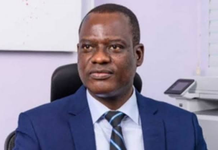
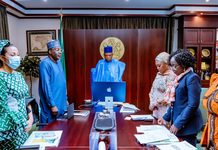
Ms Lavanya Anand, Investment Director, Cathay AfricInvest Innovation Fund (CAIF), Mr Moussa Nakoulima, EIB Country Relationship Manager for Nigeria, Mr Gautier Mignot, the Ambassador of the European Union to Nigeria and ECOWAS, Christine Adejorooluwa, Chief Strategy Officer, Beacon Power Services (BPS) and others.
The Boost Africa Investment Programme is designed to strengthen entrepreneurship and innovation and create more job opportunities across Africa.
The European Union (EU) Ambassador to Nigeria and ECOWAS, Mr Gautier Mignot, said this on Wednesday at a news conference organised to assess the impact of the programme since its launch in 2016. .
The envoy who was accompanied by entrepreneurs and investors at the conference said that the initiative was part of the EU’s long term partnership with Nigeria and other African countries under its Global Gateway strategy.
The News Agency of Nigeria (NAN) reports that Boost Africa is a joint initiative of the European Investment Bank (EIB) and the African Development Bank (AfDB), supported by the EU to facilitate access to capital for African entrepreneurs and businesses.
Mignot said the Global Gateway approach brought together “Team Europe” the EU, its member states and development banks to support sustainable growth and mobilise private investment.
He said the programme focused on financial instruments capable of creating jobs, particularly for young people, while strengthening local value chains.
According to him, the EIB has financed projects across Africa for many years, adding that news conference was also intended to highlight the human impact of such investments.
“Today’s event is precisely about more than investment figures. It is about people, entrepreneurs, innovation, jobs and the opportunities created when Africa’s talent is matched with the right partners and the right financing,” he said.
Mignot described Africa’s young entrepreneurs as one of the continent’s greatest assets, saying their ideas could transform economies, strengthen communities and create sustainable prosperity.
“Boost Africa is a key example of that model. The programme brings together the EU, the EIB, the African Development Bank, Venture Capital (VC) partners and African entrepreneurs.
“The initiative has reached 100 companies, mobilised 400 million euros and supported 15,000 jobs across Sub Saharan Africa, with significant activity in Nigeria.
“The numbers matter less than the stories behind them ,businesses that have expanded, jobs created, innovation that has grown and entrepreneurs able to realise their ambitions because financing arrived at the right time.
“Nigeria has one of Africa’s most dynamic entrepreneurial ecosystems. Supporting innovation and enterprise is essential for sustainable economic growth and job creation in the country,” he said.
He said the EIB had recently launched several new operations in Nigeria aimed at supporting entrepreneurs in the coming years.
Mignot urged stakeholders to focus not only on the achievements recorded so far, but also on ways to unlock greater opportunities for the next generation of African entrepreneurs.
Also speaking, Mr Moussa Nakoulima, EIB Country Relationship Manager for Nigeria, said Africa had a growing pool of young and talented entrepreneurs developing solutions across sectors.
He said the major challenge confronting many of them was access to capital, particularly at the early stages of their businesses when investment risks were highest.
“This is precisely where Boost Africa comes in handy and why it was launched in 2016 as a key component to help create a strong financial ecosystem for entrepreneurs and businesses across Africa,” Nakoulima said.
He said the initiative was based on the idea that providing entrepreneurs with capital, expertise, knowledge and a stronger investment ecosystem would help build competitive African businesses, create jobs and address development challenges.
Nakoulima explained that Boost Africa did not operate like a traditional commercial bank or financing institution that provided direct loans to companies.
He said the programme relied mainly on Venture Capital (VC) funds and other financial intermediaries to identify assess and finance startups and Micro, Small and Medium Enterprises (MSMEs).
NAN reports that other speakers at the briefing included investors such as Cathay AfricInvest Innovation Fund (CAIF) and beneficiaries such as Beacon Power Services (BPS).(NAN)