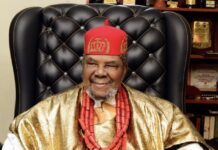
) Prof. Pat Utomi, Professor of Political Economy, has urged Nigerians to prepare for massive voter turnout during the January 2027 presidential election.
Utomi, Convener of the Big Tent and Movement for Credible Election, made the call at a media briefing in Lagos on Wednesday.
The Independent National Electoral Commission has scheduled the presidential and National Assembly elections for Jan. 16, 2027.
The governorship and state assembly elections are scheduled for Feb. 6, 2027, according to INEC’s timetable.
Utomi said massive participation was necessary to address Nigeria’s socio-economic conditions and strengthen citizens’ influence through elections.
“The state of our country is troubling. The pain, the hunger, and the anger in the land is so palpable,” he said.
He said widespread hardship had made saving Nigeria “a matter of desperation”, warning that poverty was increasingly being exploited for electoral purposes.
“Even as power continues to weaponise poverty through the buying of votes of those so hungry,” Utomi said.
He urged Nigerians to resist electoral manipulation and demand accountability from institutions responsible for protecting democracy.
“The people must stand up and force compromised institutions to do right or pay a high price,” he said.
Utomi also expressed concern over public confidence in key institutions, including the judiciary, police, EFCC and electoral commission.
“Our institutions are crumbling while public confidence in the judiciary, the police and EFCC are at an all-time low,” he said.
He claimed that many Nigerians no longer believed INEC was sufficiently independent, stressing that electoral integrity was crucial to Nigeria’s survival.
“Impunity must end in Nigeria if Nigeria is to survive,” Utomi said.
He said the Big Tent and MCE were working toward live-streaming proceedings from every polling booth during the 2027 elections.
He said the initiative would help reduce electoral malpractice and provide greater transparency across polling units nationwide.
Utomi said the proposed system would also address weaknesses associated with INEC’s existing IREV electronic results-viewing platform.
He said there should be sufficient redundancy to prevent technical failures similar to those experienced during the 2023 elections.
The political economist also highlighted the scale of Nigeria’s economic hardship, citing recent International Monetary Fund statistics on food insecurity.
“Thirty-five million Nigerians were in food insecurity,” he said, referring to figures attributed to the IMF.
Utomi further cited World Bank estimates indicating that about 139 million Nigerians could be living in poverty by the end of 2026.
He said the economic crisis was also placing increasing pressure on Nigerians’ mental wellbeing and the country’s already strained healthcare system.
Utomi said he had recently received numerous requests for financial assistance from people he previously considered members of the middle class.
“I was beginning to think that I was being targeted because I received like a dozen or more desperate solicitations for money,” he said.
He initially believed people might be approaching him because they knew he would share whatever resources he had.
However, Utomi said he later discovered that many other Nigerians were receiving similar requests, suggesting that the problem was widespread.
“Until a few days ago, I realised that I wasn’t the only one getting those requests. It was all over the place,” he said.
Utomi said the situation showed how economic hardship was eroding dignity, with begging increasingly becoming normalised among Nigerians previously able to support themselves.
“So Nigerians have now lost their dignity that the shame of begging is nothing but has become a trend,” he said. (NAN)