) A maritime lawyer, Dr Emeka Akabogu, has urged maritime writers to deepen their understanding of landmark Nigerian cases to produce accurate and authoritative literature on the industry.
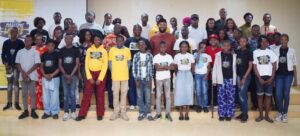
Akabogu, Senior Partner at Akabogu and Associates, gave the charge while training participants at the sixth Maritime Writes Project (MWP) Creative Writing Bootcamp on Monday in Lagos.
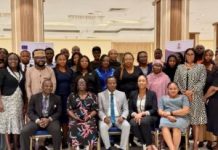
The News Agency of Nigeria (NAN) reports that the bootcamp is designed to equip participants with practical knowledge and skills to produce credible literature on Nigeria’s growing maritime sector.
Speaking on “Real Cases Every Maritime Writer Should Know”, Akabogu simplified eight landmark judgments covering shipping, ports, cargo claims, arbitration and environmental protection.
He cited Owners of M.V. Arabella v. NAIC, which affirmed the Federal High Court’s exclusive admiralty jurisdiction and strict requirements for serving court processes outside Nigeria.
According to him, the Supreme Court, in Owners of M.V. Lupex v. NOCSL, upheld the binding nature of arbitration agreements in maritime contracts.
Akabogu also examined Basinco Motors v. Woermann-Line, where the court held that being a “notify party” on a bill of lading did not confer the right to sue.
He said Pacers Multi-Dynamics v. M.V. Dancing Sister reinforced the principle that notify status alone did not confer legal standing in cargo claims.
The lawyer highlighted Centre for Oil Pollution Watch v. NNPC as a landmark judgment that strengthened public access to the courts in matters concerning environmental protection and accountability.
He also explained the Resource Control judgment, which addressed Nigeria’s constitutional rights over its territorial waters, exclusive economic zone and continental shelf.
Akabogu cited SIFAX v. Migfo to explain that disputes connected to ports were not automatically classified as admiralty matters under Nigerian law.
He also referenced Alraine Shipping v. NSC, which, according to him, underscored the regulatory framework governing port charges and the powers of maritime authorities.
Akabogu said understanding the legal foundations of maritime operations would enable writers to produce more credible books, features and authoritative industry reports.
“Maritime writers must understand the legal framework underpinning the industry if they are to accurately interpret developments and tell compelling stories,” he said.
Also speaking, a Chief Lecturer, Department of General Studies, Moshood Abiola Polytechnic, Dr Lucky Aikabeli, took participants through “A-Z of Publishing”, focusing on manuscript development and the production of commercially viable books.
A coffee artist, Mr Ekene Ngige, emphasised the importance of visual storytelling, demonstrating how book covers and illustrations could make children’s maritime literature more engaging and marketable.
Other facilitators included Master Mariners Capt. Warredi Enisuoh, Mrs Nneka Obianyor, Capt. Oluwasegun Akanbi and Capt. Marvin Omovbude, among others, who shared industry insights during the third day of the bootcamp. (NAN)