Stakeholders in women’s health have called for improved data and measurement systems to better address women’s health needs across different stages of life.
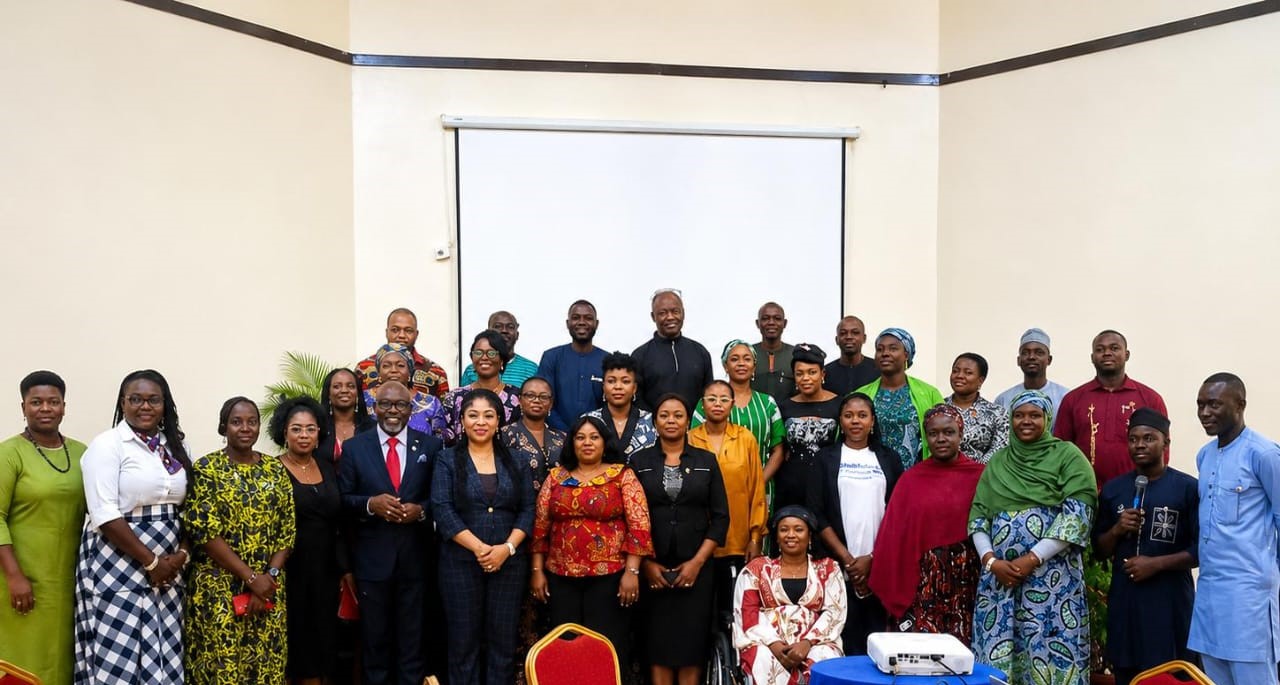
The stakeholders made the call at a Stakeholders’ Engagement Meeting themed “Weaving the Web: A Transformative Framework for Women’s Health Measurement” on Thursday in Abuja.
The project organised by Veritas University, Abuja, in collaboration with University of Abuja and University of Windsor, brought together representatives of development partners and Persons With Disabilities (PWDs) to discuss the development of a framework for measuring women’s health.
Dr John Ovuraye, Director, Planning, Research and Statistics, Federal Ministry of Health and Social Welfare, in his remarks said reliable data was very effective in health planning.
“For us in the Ministry, reliable data is critical to effective health planning and policy-making.
“We welcome research that can provide evidence on the different dimensions of women’s health and help us identify gaps that require government intervention,” he said.
Dr Theresa Nwachukwu, the Executive Director, Public Health Department, Federal Capital Territory Administration, said the department’s mandate includes public health programme planning, monitoring and evaluation, research/surveys, and data management for evidence-based decisions.
Represented by the Acting Secretary, Dr Ngozi Nwachukwu, she said that the department was in full support of the initiative and looked forward to the outcomes of the engagement, particularly recommendations that could contribute to evidence-based planning and improved health outcomes.
Nwachukwu, described the initiative as a flexible and practical approach to improving women’s health measurement.
Dr Emmanuel Okechukwu, Co-Principal Investigator of the project, said the initiative was designed to address gaps in existing women’s health measurement frameworks, which largely focused on biomedical and reproductive health indicators
Okechukwu, a Senior Lecturer at Veritas University, said the gaps included areas such as mental health, caregiving burden, gender-based violence and some chronic conditions.
He said the project combined primary data, existing datasets and analytical tools, including machine learning and natural language processing, to generate evidence for policy decisions.
Also speaking, a Co-Investigator of the project, Prof. Perpetua Ibekwe, said a review of studies conducted as part of the project showed gaps in measuring women’s health across the life course and in capturing intersectional factors.
She said the project would develop an Artificial Intelligence-powered multidimensional women’s health framework and a digital platform to support analysis and policymaking.
Similarly, the Provost, College of Health Sciences, Prof. Titus Ibekwe, said stakeholder participation was important to ensuring that the research reflected the needs of the target population.
Ibekwe said researchers needed stakeholders’ technical input before commencing field data collection.
“In every research that is designed towards improving the welfare of mankind, you must create a time to interact with stakeholders and have their input and have their technical know-how into the work you’re doing,” he said.
He said the project was still being refined and that stakeholders’ contributions would help strengthen it before data collection.
The Vice Chancellor of Veritas University, Prof. Hyacinth Ichoku, said the project came at the right time as it would contribute to addressing existing gaps in women’s health measurement.
Rrepresented by Rev. Fr. Richard Gokum, the Chief Executive Officer of Abuja Endowment Foundation of Veritas University, Ichoku said it would also contribute and provide useful evidence for better planning and decision-making.
He added that the university was pleased to support initiatives that brought researchers, government and other stakeholders together to develop practical solutions to women’s health challenges.
The News Agency of Nigeria (NAN) reports that stakeholders at the event also reviewed data-collection tools, validation, consensus-building, ethics and data governance.
The project is expected to proceed with the finalisation of research instruments, ethical data collection and inclusion of women and girls with disabilities.(NAN)