) Stakeholders in the disability sector have clarified that tribal marks, bowlegs, wearing glasses and other physical features should not be classified as disabilities.
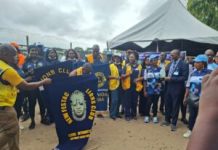
The stakeholders made the clarification during a discussion on disability models and inclusive approaches organised by the Centre for Citizens with Disabilities (CCD) on Friday in Abuja.
The meeting, supported by the International Climate Initiative (IKI), focused on greenhouse gas emissions and climate change adaptation and mitigation in Nigeria, viewing Persons with Disabilities (PWDs) as agents of climate action.
Mrs Florence Austin, CCD Finance and Administration Manager, said there was a need to distinguish between physical characteristics, health conditions and disabilities to avoid undermining the vulnerabilities of persons with disabilities.
Austin explained that disability should be understood beyond physical appearance, particularly where an individual’s condition did not prevent full participation in society.
According to her, the classification of disability should take into consideration the interaction between an individual’s impairment and barriers within the environment.
“The United Nations defines persons with disabilities as those who have long-term physical, mental, intellectual or sensory impairments which, in interaction with various barriers, may hinder their full and effective participation in society on an equal basis with others,” she said.
She urged policymakers, institutions and the public to adopt appropriate language and understanding when discussing disability to promote dignity and prevent discrimination.
Also speaking, Ms Onyemaechi Constance, Executive Director of the Women and Girls with Albinism Network, said labelling people with certain physical characteristics as persons with disabilities could reinforce stigma and misconceptions.
She called for greater public understanding of disability, saying attention should focus on removing barriers, promoting accessibility and protecting the rights of persons with disabilities rather than comparing levels of disability.
“The presence of a physical feature or condition did not on its own necessarily mean that a person has a disability.
“I am a person with a long-term disability because I was born with albinism.
“I currently also have a short-term disability that has confined me to a wheelchair, but I cannot describe myself as a person with a physical disability because the condition is temporary.
“Disability should be understood within the context of an impairment and the barriers that may hinder a person’s full and effective participation in society on an equal basis with others,” she said.
Constance emphasised that disability should not be determined merely by physical appearance, adding that some conditions could be addressed through medical intervention, assistive devices or other forms of support without defining a person’s identity.
Mr Ousola Ojo, Youth Leader of the Spinal Cord Injury Association of Nigeria (SCIAN) and Convener of Politics and PWDs, urged policymakers, organisations and the public to use appropriate definitions and classifications when discussing disability.
Ojo said there was a need for greater public understanding of disability, noting that not every physical condition or feature should be regarded as a disability.
He added that proper classification was important in developing effective policies and interventions that addressed the actual needs of persons with disabilities.
Also speaking, Mrs Sussan Ihuoma, Executive Director of Sussan’s Unique Oasis Foundation, emphasised the importance of adopting a rights-based approach to disability rather than viewing persons with disabilities solely through medical or charity models.
According to her, such an approach would promote dignity, equality, participation and inclusion of persons with disabilities in all aspects of society.(NAN)