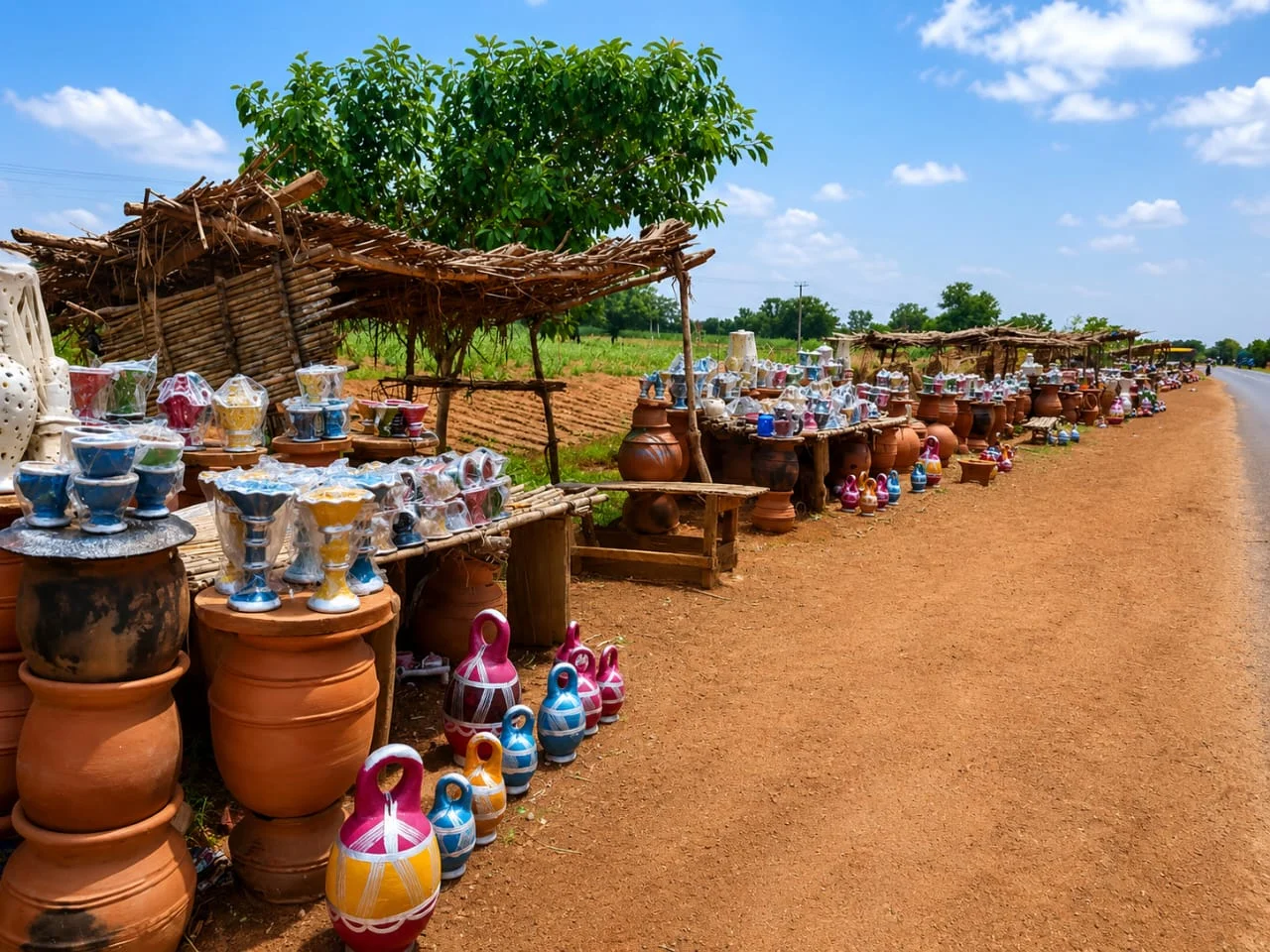
Young artisans in Kano State are turning locally sourced clay into attractive handcrafted products, creating employment opportunities and preserving the state’s rich pottery tradition.
A survey by the News Agency of Nigeria (NAN) at roadside pottery clusters along major highways in Wudil Local Government Area shows dozens of youths displaying clay pots, flower vases, decorative jars, water coolers, and ornamental wares for travellers and visitors.
The products, made from locally sourced clay, are hand-moulded, dried, fired in traditional kilns, and decorated with colourful designs to meet changing consumer preferences.
The wares serve both domestic and decorative purposes, with customers purchasing them for water storage, gardening, home decoration, and as gift items.
Some of the artisans told NAN that pottery had become a reliable source of livelihood, enabling many young people to acquire vocational skills and become self-reliant.
One of the potters, Jamilu Abdulkerim, said the craft had sustained his family for years and provided opportunities to train apprentices.
“Pottery is more than our tradition; it is our business. We make these products with our hands, and people buy them because they are durable and affordable,” he said.
Another artisan, Sani Hassan, said demand for the products usually increases during festive periods and weekends when travellers stop at the roadside markets.
He added that despite competition from imported household items, many customers prefer clay products because of their natural cooling effect and cultural value.
According to him, artisans have also diversified into painted flower pots and decorative pieces to attract urban households, hotels, and corporate buyers.
A trader, Nurudeen Suleiman, said social media had helped expand the market for the products, with customers placing orders from different parts of the country.
He, however, identified limited access to finance, poor infrastructure around production sites, and rising transportation costs as major challenges facing the business.
Some customers who spoke with NAN commended the artisans for preserving Kano’s cultural heritage while contributing to the local economy through self-employment.
They called on government and development partners to support pottery clusters with modern kilns, skills development programmes, improved packaging, and better market access to enhance their competitiveness.
The thriving roadside pottery markets continue to showcase the resilience, creativity, and entrepreneurial spirit of Kano youths, demonstrating how local resources can be transformed into sustainable livelihoods. (NAN)