The United Nations Office on Drugs and Crime (UNODC), the National Drug Law Enforcement Agency (NDLEA) and the Nigeria Union of Journalists (NUJ) and other stakeholders have called for stronger family action against drug abuse.
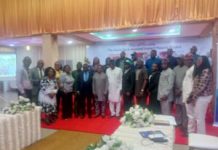
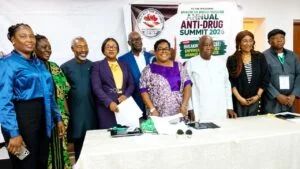
They made the call at the inaugural annual Anti-Drug Summit organised by Balm for the Bruised Foundation in Abuja, themed “Breaking the Cycle: Empowering Families Against Drug Abuse.”
The News Agency of Nigeria (NAN) reports that the summit was organised by the Foundation as part of activities marking the 50th birthday anniversary of its Chief Executive Officer, Princess-Ekwi Ajide.
Project Lead on Alternative to Incarceration at UNODC, Dr Akanidomo Ibanga, said drug abuse was not merely an individual problem, stressing that families and communities must play central roles in preventing substance abuse.
Ibanga said that families were the first teachers, protectors and responders, noting that informed and supported households remained critical protective factors against substance use.
According to him, families need knowledge about drugs, communication skills, supervision, emotional support and access to early intervention services to effectively prevent substance abuse.
He urged government and stakeholders to strengthen evidence-based family programmes, parenting skills training, counselling, rehabilitation and school-linked interventions to address drug abuse nationwide.
The UNODC representative also called for stronger community support systems, saying Civil Society Organisations (CSOs) remained essential bridges between government policies and vulnerable people within communities.
He further advocated a public health approach to substance abuse, urging stakeholders to reduce stigma and promote treatment, care, rehabilitation and reintegration for affected persons.
In her welcome address, Founder/CEO, Balm for the Bruised Foundation, Princess Ajide, said that drug abuse has become one of the most pressing social challenges of our time, affecting communities across the country.
“So many families are carrying the pain of addiction. Too many dreams have been cut short, too many futures placed at risk, and too many parents are asking where things went wrong.
“Yet, in spite these challenges, we have reason to hope. That hope begins in the family.
“It begins with parents who listen, teachers who guide, communities that care, faith leaders who mentor, and young people who choose courage in confronting the challenges of addiction”.
She said that this belief inspired the establishment of the Balm for the Bruised Foundation and the creation of this annual summit.
“We believe that prevention is far more powerful than cure. When parents are equipped with knowledge, effective communication skills and the right support, they become the first and strongest line of defence against drug abuse”.
Similarly, Momodu Sule, a retired Deputy Commander-General and former NDLEA Director of Technical Services, criticised poor implementation of government drug education policies.
Sule said drug education was introduced into primary and secondary schools decades ago, but questioned why the policy was not being effectively implemented across Nigerian schools.
He also urged government to enforce policies requiring drug-free clubs and drug testing in schools, saying prevention remained significantly better than treating substance use disorders.
The retired NDLEA officer said parents must also examine their responsibilities, warning that negative behaviours such as smoking and excessive drinking could influence children and encourage harmful habits.
Dr Aliyu Omama, Deputy Commander of Narcotics, NDLEA FCT Strategic Command, said the agency was shifting emphasis from arrests and seizures toward sensitisation, counselling and prevention.
Omama said drug abuse could alter users’ behaviour, urging families and communities to support NDLEA efforts to prevent substance abuse and protect vulnerable young people.
On her part, NUJ FCT Council Chairman,
Grace Ike, called for stronger community action, family support and government commitment, saying drug abuse was affecting homes, schools, workplaces and communities.
Ike urged journalists to report substance abuse responsibly, highlight recovery stories and solutions, while avoiding sensationalism that could deepen stigma against affected individuals and families.
Martin Igwe, Regional 1st Vice-President (West Africa) at West African Action Network on Small Arms. (WAANSA) identified inadequate parental care as a major risk factor, urging parents to educate children about drugs and monitor peer relationships.
He said: “We must take a bold step toward preventing drug abuse by making sure parents take responsibility to educate their children on the dangers of drugs to their health”.
Dean, Faculty of Management Sciences, Nile University, Prof. Mary Nwoye, said education, mentorship and stronger family support were essential to addressing drug abuse and youth vulnerability.(NAN)