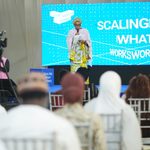
The National Health Insurance Authority (NHIA) says artificial intelligence must be supported by integrated digital infrastructure and stronger institutions to improve medical services and achieve universal coverage in Nigeria.
The Director-General of NHIA, Dr Kelechi Ohiri, said this at the BusinessDay 2026 CEOs Forum on Thursday in Lagos.
Ohiri said while AI was reshaping healthcare globally, Nigeria’s immediate priority should be strengthening its health system through greater investment in infrastructure, personnel and digital technologies.
“I think a lot of times we think AI is the solution, but it is not,” he said.
He said Nigeria still required more doctors, nurses and hospitals, adding that technology should complement existing healthcare systems rather than replace health workers.
According to him, digital tools can help bridge gaps in access to care and improve service delivery while the country continued to expand its healthcare infrastructure.
Ohiri said government was already engaging digital health providers, digital pharmacies and other technology firms to build a more connected healthcare ecosystem.
He said healthcare was becoming increasingly personalised, making digital infrastructure critical to improving patient outcomes and the quality of care.
“We have to invest in mobile, internet and the web so that if there is an incident, we can easily pull up patients record, look at their history and provide the right care,” he said.
Ohiri said government had launched a national digital health initiative to integrate health information systems and enable seamless care across the country.
He said the initiative was bringing together the NHIA, the Nigeria Centre for Disease Control and Prevention (NCDC), the National Primary Health Care Development Agency (NPHCDA) and other stakeholders to harmonise health data.
According to him, the authority is also collaborating with the Ministry of Communications, Innovation and Digital Economy and agencies responsible for digital identity to strengthen digital transformation.
He said integrating digital identity with health records would improve patient identification, support seamless access to services and reduce fraud.
The NHIA boss said government was deliberately shifting away from fragmented pilot projects towards coordinated, nationwide reforms that would deliver lasting impact.
He said although pilot programmes remained useful for testing ideas, the focus had shifted to building sustainable systems backed by policy and legislation.
According to him, the Federal Government currently finances health insurance for about 2.5 million vulnerable Nigerians who previously had no financial protection against illness.
He added that government-funded emergency maternal care interventions implemented in about 300 hospitals enabled more than 50,000 women to access life-saving services last year.
Ohiri said Nigeria’s health sector had also faced significant funding pressures following cuts in development assistance by some international partners.
He noted that government responded by making about 200 million dollars available to sustain critical disease programmes and protect essential healthcare services.
“We must stop fragmentation and build a coherent health system moving forward. This is no longer about pilots. It is policy enshrined in law, and we are building the infrastructure to meet the needs of Nigerians,” he said.
Ohiri said more than 22 million Nigerians were currently covered under the national health insurance scheme, following reforms implemented over the past two years.
He said a presidential directive issued in September 2025 had reinforced health insurance as a national priority, adding that building public trust would be critical to expanding coverage.
Ohiri said achieving universal health coverage would depend on sustained investment in digital infrastructure, stronger institutions, effective collaboration and long-term policy implementation. (NAN)