The International Ocean Institute Nigeria Centre (IOI-Nigeria) and the Nigerian Institute for Oceanography and Marine Research (NIOMR) have called for innovative, inclusive and sustainable approaches to ocean governance to drive economic growth and national development.
The News Agency of Nigeria (NAN) reports that the organisations made the call on Tuesday at an event they organised to commemorate 2026 World Ocean Day whichisobserved annually on June 8
The Director of IOI-Nigeria, Mr Akanbi Williams, said Nigeria must move beyond traditional approaches and embrace sustainable pathways for ocean governance, conservation and ocean-based development.
Williams described the need to reimagine the nation’s relationship with the ocean as both an environmental necessity and an economic imperative.
“The ocean is the foundation of life on earth. It regulates our climate, supports biodiversity, produces much of the oxygen we breathe, and provides food and livelihoods for billions of people,” he said.
According to him, the ocean drives economic growth across several sectors but faces increasing threats from pollution, habitat destruction, over-exploitation of resources, climate change, and unsustainable development practices.
He said that harnessing the ocean’s potential would require balancing economic prosperity with environmental sustainability and social equity.
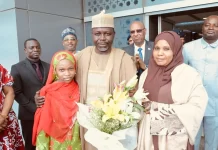
Yhe Executive Director and Chief Executive Officer of NIOMR, Prof. Abiodun Sule, said the institute was proud to partner with IOI-Nigeria in commemorating the global event.
Represented by the Director of Research at NIOMR, Dr Olajumoke Edun, Sule said the theme of 2026 World Ocean Day, “Reimagine: Beyond the World We Know, A New Relationship with Our Ocean,” was timely and thought-provoking.
According to him, the theme challenges stakeholders to rethink how ocean and coastal resources are governed, utilised, conserved and valued amid climate change, biodiversity loss, marine pollution and increasing competition for ocean space.
Sule said the partnership between NIOMR and IOI-Nigeria had endured for more than two decades.
He noted that since the establishment of IOI-Nigeria in 2002 and its location within NIOMR, both institutions had collaborated in advancing ocean governance, marine scientific research, capacity development, ocean literacy and sustainable ocean management.
“Since 2009, we have jointly commemorated World Ocean Day, creating a platform for dialogue, awareness, advocacy and action on issues affecting our ocean and coastal environments,” he said.
Sule added that the institutions’ partnership had remained strong because their mandates and visions were closely aligned.
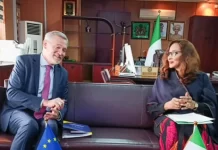
The Managing Director of the International Ocean Institute Headquarters, Malta, Dr Antonella Vassallo, emphasised the importance of ocean governance, science, literacy and capacity development.
Vassallo noted that the ocean covers more than 70 per cent of the earth’s surface and must be preserved to sustain life.
She said the Blue Economy offered significant opportunities for economic growth, employment, innovation, food security and sustainable development.
“However, achieving these benefits requires more than increasing our use of ocean resources. It requires responsible and equitable management of those resources.
“A truly sustainable Blue Economy balances economic opportunity with environmental stewardship,” she said.
Vassallo added that improving ocean literacy would enable citizens to make informed decisions about the future of the ocean and better understand opportunities and challenges associated with the Blue Economy.
In a keynote lecture entitled, “Reimagining the Blue Economy: Achieving Sustainable Prosperity with the Ocean,” Mr Ubong Essien, Founder of Blue Economy Academy and Blue Economy TV, called for greater collaboration in protecting the ocean.
Essien said Nigeria must leverage its ocean resources to achieve long-term prosperity, especially as dependence on oil had become increasingly unsustainable.
“The Blue Economy is the way to go if we want to become prosperous as a nation. We must reimagine our relationship with the ocean,” he said.
He decried marine littering and stressed the need for responsible and sustainable ocean management.
“We must move from sea blindness to sea consciousness and recognise the importance of the ocean in our lives,” he said.
On marine protected areas, Essien said Seychelles had achieved 30 per cent coverage, Kenya, six per cent and South Africa 5.4 per cent while Nigeria stood at 0.017 per cent.
He said that Nigeria was far behind global targets with only four years left to meet commitments under the biodiversity framework.
Essien called for improved ocean literacy among policymakers and other stakeholders.