The production of vegetables has been identified as a means of enhancing food security, increasing employment opportunities and household income.
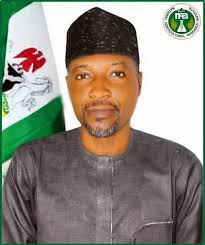
The Executive Director, National Horticultural Research Institute (NIHORT), Prof. Mohammed Lawal, said this during a training to encourage home gardening of vegetables and fruits in Ibadan on Thursday.
The training highlights, among other vegetables, the agronomic (the science and technology) of producing Corchorus olitorius, a leafy vegetable and fibre plant, commonly called jute mallow; ewedu in South-West Nigeria.
The executive director said that agriculture remained a veritable avenue to lift the country out of food insecurity and poverty.
Lawal, represented by Dr Henry Akintoye, said agriculture has been focused on as a means of diversifying Nigeria’s economy from its mono-product status.
“This particular training is targeted at broadening socio-economic inclusion through the enhancement of food security, employment opportunities, household income and livelihood.
“Vegetables are rich sources of vitamins and provide roughage that helps in the movement of food in the intestine.
“They are essential sources of micronutrients, needed for healthier diets and are an important component of Nigeria’s diet.
“Vegetable production has the potential to increase food security, provide income, reduce poverty and unemployment.
“They can be produced all year round with irrigation, and it is important to note that some leafy vegetables may be ready for harvest in 20 to 60 days,” he said.
According to Lawal, vegetables, which can be cultivated across various agro-ecological zones in Nigeria, produce high income for farmers due to their high demand.
He named tomato, pepper, okro, and onion as some major fruiting vegetables produced in Nigeria.
Lawal identified NIHORT as the only institute in the country responsible for conducting research into genetic improvement and production technologies of fruits and vegetables.
According to him, the institute’s other roles include the processing and marketing of fruits, vegetables, spices, and ornamental plants of nutritional and economic importance.
“The institute has competencies and cognate experiences in capacity development and has built the capacity of stakeholders in an array of horticultural crops.
“Such crops include plantain, banana, citrus, mango, tomato, pepper, bush mango and mushrooms, all across the country.
“The institute has several productions and post-harvest technologies on vegetables, such as availability of improved varieties, technologies for pest and disease management, as well as post-harvest management, among others,” he said.
He, however, implored the participants to utilise the opportunities the training offered to acquire knowledge and skills for progress at personal and national levels.
“You are free to contact the institute in case you have questions on any of the horticultural value chains that may be of interest to you,” he said.
Meanwhile, the Programme Facilitator, Dr Joel Akinfasoye, said seed procurement and sources must, however, be well-known to achieve the desired result.
“The seeds must be obtained from research institutions and reputable seed companies.
“It is advisable that if farmers intend to produce seeds from their farms, the farms should be marked out, not for regular vegetative harvest.
“Proper spacing is required for seed production, as this will enable them to grow well and produce quality products.
“Seed storage and seed treatment are best under cold conditions,” he said.
Akinfasoye said that for good products, land selection and preparation, which take about 50 per cent of the yield, were critical.
“Also essential are seed sowing techniques and seed rate, seed emergence and tending, cultural practices, weeding, ridging, fertiliser and manure application rate, monitoring for pest and disease invasion,” he said.
A participant, Mr Gbenga Oladoyinbo, said he was more interested in learning improved home gardening methods, as the harvest of his tomatoes and vegetables had declined in recent times.
“However, with this training, I am hoping to revive my planting skills and harvest,” he said.
Another participant, Mrs Idowu Ajayi, said she came to acquire more knowledge on getting good seeds, vegetable planting and care.
“I want to learn and know about planting and growing vegetables without using chemical fertilisers,” she said.
One other participant, Mr Peter Odion, who claimed to have been a farmer from his youth, said he was satisfied with the orange seeds he previously received from NIHORT.
Odion said he was at the programme to learn modern planting methods.