Ms Juliana Anosike, the Project Manager, Friedrich Ebert Stiftung (FES), a German Non-Governmental Organisation (NGO), has called for inclusion of women in the informal economy in decision-making processes affecting their businesses.
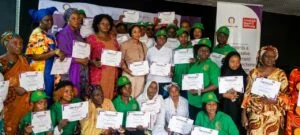
Anosike made the call during a Forum for Women in the Informal Economy organised by Feminism Lab on Monday in Gwagwalada.
The News Agency of Nigeria (NAN) reports that Feminism Lab is an initiative of the Friedrich Ebert Stiftung committed to advancing gender justice, and women’s economic empowerment.
It is also committed to inclusive policy reforms through research, advocacy, capacity strengthening, and community engagement.
According to Anosike, the forum is organised as part of efforts to address challenges confronting women operating in the informal economy and to strengthen their economic empowerment.
She said that the programme was designed to equip women with practical knowledge, and to generate recommendations for more responsive local economic policies.
She said this was part of the organisation’s efforts to amplify the voices and economic requirements of women.
The project manager said the organisation, which has operated in Nigeria since 1976, was committed to promoting social democracy, participatory governance and citizens’ engagement in democratic processes.
She said that the programme stemmed from findings of a research project conducted by Feminism Lab in 2025, which examined wealth creation and distribution from a gender perspective.
“From the interaction with the women today, most of them are talking about multiple taxation. They are taxed by the local council, they are taxed by the federal government at the same time.
“Sometimes they are not even aware of which one is which and where it comes from.
“It is good to educate them on this area so they can understand that not all taxation is wrong and also avoid unnecessary financial burdens,” she said.
She said that women operating in the informal sector played critical roles in sustaining families through trading, food vending, tailoring, agricultural processing and other small-scale businesses.
“Many of these women are breadwinners in their families. They provide food, pay school fees and support household welfare. Strengthening their businesses means strengthening families and communities.
“Women in the informal sector are the invisible backbone of the economy. They work hard, work smart and contribute significantly to national development, yet their efforts are often overlooked.
“Empowerment is not a gift we give to women. It is a right we have for too long allowed systems and structures to withhold.
“Investing in women in the informal economy is not charity. It is arguably the highest return on development investment available to us,” she said.
Anosike lamented the harassment and intimidation faced by many women traders from unauthorised individuals who impose illegal levies and sometimes confiscate goods.
She said that such practices exposed women to financial losses and physical harm, stressing the need for greater awareness of legal rights and protections available to informal workers.
“We must educate ourselves on what the law says and what our rights are. Knowledge empowers people to distinguish between legitimate obligations and exploitation,” she said.
According to her, women continue to face barriers, including limited access to credit, inadequate legal recognition and exclusion from decision-making processes affecting their businesses.
“This is in spite of them accounting for a large share of informal sector workers in Nigeria,
“When a woman trader can not access a business loan because she lacks collateral, this is a structural failure.
“When a woman vendor is displaced from a market without consultation because she holds no title, that is governance failure.
“When a woman entrepreneur can not scale her business because digital and financial tools were not designed with her in mind, that is an innovation failure,” she said.
She said that those failures were collective challenges that must be addressed by governments, financial institutions and development partners.
She urged the participants to take advantage of the opportunities and actively participate in discussions affecting the informal sector.
“Ignorance steals opportunities and limits growth. Women should engage with facilitators, understand their rights and seek ways to improve their businesses.
“They should also ensure that their voices are heard when decisions concerning the informal economy are being made, because they are the majority players in the sector,” she said.
She said that empowering women economically would contribute significantly to national development and inclusive growth.
Mr Daniel Benedict, Head, Monitoring and Compliance Unit, FCT-IRS, Gwagwalada Tax Office, said that taxes were meant to be paid by every taxable individual.
Benedict, while speaking on the topic, “Taxation, Levies and Your Rights”, urged traders to keep proper financial records of their businesses in order to know their profits.
He said that the reason many businesses did not grow was because owners did not allow them to, adding that traders should not spend at the expense of their businesses.
“Keep separate records for your business and your personal money. Without proper records, there is a problem,” he said.
He advised business owners to pay their taxes regularly, adding that money generated from taxes was used for the development and growth of the nation.
“Taxes, when collected, help to develop the country through the construction of roads, hospitals, schools and other amenities in communities.
“It is not the sole responsibility of the government to make things work; it should be a collective effort,” he said.
He said that it was important for women to use their voices, not only in their homes, but also in their communities and the nation to advocate for the provision of basic amenities.
Benedict said that this would not be possible if they did not contribute to the government through the payment of their taxes as business owners.
He said that people doing business must file his their tax returns, adding that taxes are paid on profits from businessman.
Mr Salihu Muhammad, Special Adviser and Decentralised Financial Educator, said there was a need for business money to be kept separate from every other money.
Muhammad said that this would help in monitoring the growth of the business.
He advised business owners to continually improve their businesses by embracing innovative ideas that would move their businesses forward.