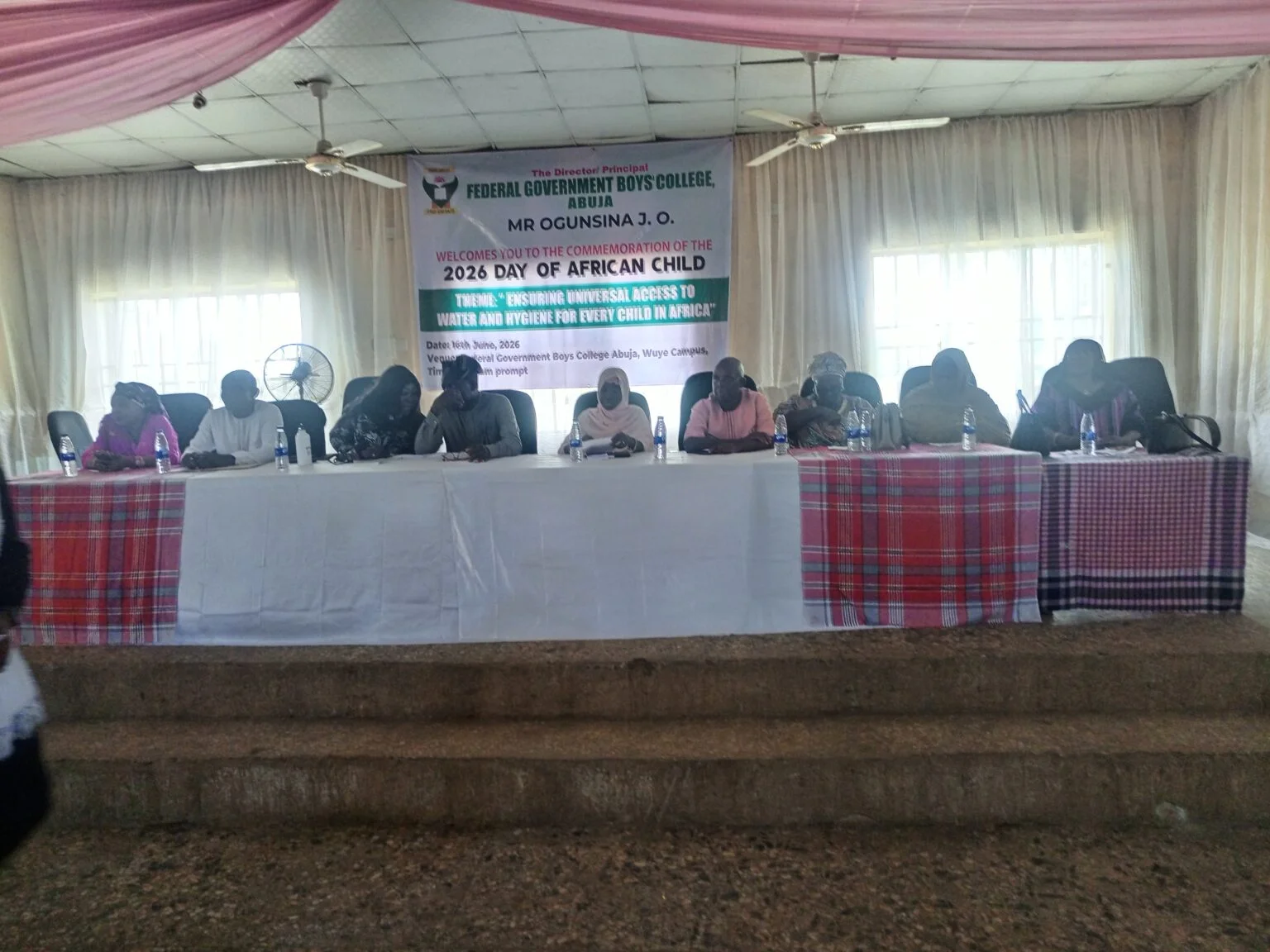
The Principal of Federal Government Boy’s College (FGBC), Abuja, Mr Joshua Ogunshina, has urged students to embrace good hygiene practices and become agents of positive change in society.
Ogunshina made the call on Tuesday during the commemoration of the 2026 Day of the African Child.
The event, organised in collaboration with the United Nations Children”s Fund (UNICEF) and other partners, had as its theme: “Ensuring Universal Access to Water, Sanitation and Hygiene for Every Child in Africa.”
Ogunshina said the celebration was aimed at drawing attention to the challenges facing African children, including insecurity and limited access to basic services.
“The purpose is to create awareness about the plight of the African child. Among the challenges are banditry and insurgency, which continue to affect children, particularly in schools,” he said.
The principal stressed the importance of water, sanitation and hygiene in preventing diseases and improving the well-being of children.
He advised students to cultivate healthy habits such as regular handwashing, use of clean utensils and proper personal hygiene.
Ogunshina also reminded the students that the Day of the African Child commemorates the struggle of children in Soweto, South Africa, for access to quality education.
He urged the students to contribute to nation-building and work toward addressing social challenges in the country.
“When you become leaders, give back to society the benefits you enjoyed in this college, including access to water and affordable education,” he said.
Also speaking, the Assistant Vice Principal (Students’ Affairs), Mrs Oby Ezielo, who delivered a lecture on the theme, said children could contribute to improved hygiene by washing their hands regularly, keeping their clothes and surroundings clean, and using clean utensils.
“There are many things we can do. Wash your hands wherever you find yourself, use clean utensils, wash your clothes and keep yourself neat because good hygiene starts with everyday habits,” she said.
She also stressed the need for students to remain in school and take their education seriously, noting that education empowered children to understand their rights and contribute positively to society.
Ezielo further encouraged students to maintain a clean school environment, describing sanitation as a collective responsibility.
“Stay in school, complete your education, make your parents and society proud, and ensure your environment is clean because cleanliness and sanitation are essential for a healthy life,” she said.
Dr Chinwe Ogbuka, Executive Director of De-Prime Initiative for Advancement of Civil Liberty and Civic Duty, said the theme of this year’s celebration underscored the need for children to adopt healthy habits and maintain clean environments.
“We want them to imbibe the spirit of cleanliness, know their rights, understand the importance of water and sanitation, and make a personal effort to maintain good hygiene and good health,” she said.
Ogbuka also called on civil society organisations to complement government efforts in providing essential services for children, noting that government alone could not provide all the facilities needed by schools and communities.