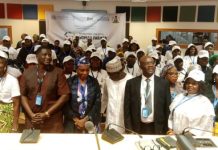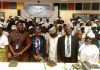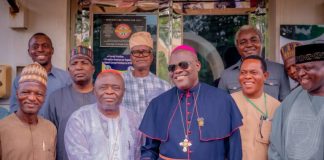
The call formed a major focus of discussions at a two-day workshop for arts and culture journalists in Lagos.
The workshop was organised by Casa Africa, the Embassy of Spain in Abuja and Yemisi Shyllon Museum of Art , Pan-Atlantic University.
The workshop with the theme, ‘New Narratives and Singular Communication in Journalism: The Museo del Prado Experience’, brought together journalists, museum professionals and communication experts.
The workshop explored how culture is communicated, who shapes artistic visibility and how journalism influences public understanding of art.
Carlos Chaguaceda, Director of Communication and Corporate Affairs at Spain’s Museo del Prado, said museums now operate in the same attention economy as brands, media organisations and digital platforms.
According to Chaguaceda, museums can no longer depend on the value of their collections alone but must deliberately create narratives that connect with audiences.
“The best way to be relevant is to catch the attention being the first one or even the last one.
“What doesn’t work in communication is the middle term,” he said.
Drawing from communication campaigns developed at the Prado and his experience in corporate storytelling, Chaguaceda said cultural institutions must think beyond exhibitions and objects.
“The museum is not only a collection of masterpieces.
“The Prado Museum is more than the collection of paintings we have,” he said.
He explained that institutions increasingly earn relevance not only through what they own but through the stories they tell, the conversations they create and the public value they generate.
He said that conversation extended naturally to journalism.
Jess Castellote, Director of Yemisi Shyllon Museum of Art, said the art ecosystem was an interconnected network and that journalists held unusual influence within it.
“You are part of the gatekeepers.
“If this weekend there are three exhibitions or four exhibitions in Lagos, and you are going to write something, you will have to choose.
“You are a gatekeeper. You have power,” Castellote told participants.
He said that journalists, galleries, museums, collectors, curators, scholars and policymakers collectively shaped what became visible and what entered cultural memory.
According to Castellote, media attention does more than document art, rather it validates artistic production, influences audiences and contributes to determining whose work becomes historically recognised.
He noted that Nigeria’s art ecosystem remained dynamic but structurally uneven.
He noted that although private collectors kept the sector afloat, institutional collecting, museum infrastructure, documentation and long-term cultural investment were still limited.
He said cultural journalism was therefore more crucial where institutional structures were still developing.
The workshop also examined how technology is reshaping newsroom practice.
Presenting findings from a study involving journalists across African countries, Dr Nwachukwu Egbunike said many media professionals remained cautious about artificial intelligence because of concerns around newsroom funding, misinformation, job security and editorial identity.
Egbunike, Researcher and Senior Academic, Pan-Atlantic University, said artificial intelligence should support newsroom workflows but not replace cultural understanding, verification and interpretation.
He warned that reliance on dominant global datasets risked flattening local realities and weakening cultural nuances in storytelling.
“How do we now use AI tools without losing touch of our cultural sensitivity?
“That is the question,” he said.
The wider responsibility of journalism in shaping public behaviour also featured in the discussions.
Joan Tusell, Head of Media Relations at Casa África, said Spain’s experience with reporting gender-based violence showed that sustained and responsible media attention had changed public attitudes.
“The power that we have as journalists is so, so important.
“How we explain things, how we communicate things to people,” he said.
Tusell added that combating disinformation, whether around elections, health or public issues, required local expertise working alongside international knowledge rather than imported solutions.
By the end of the workshop, participants were urged to see arts reporting as more than event and exhibition coverage.
They were challenged to treat it as a practice that shapes institutions, strengthens cultural ecosystems and keeps museums visible beyond their walls and collections.(NAN)