The Kogi Government, in collaboration with the Neglected Tropical Diseases (NTDs) Control Programme and Sightsavers, has concluded plans to deworm about 550,000 children across 10 endemic Local Government Areas (LGAs) of the state.
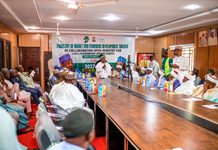
The initiative was unveiled at the end of a two-day planning meeting in Lokoja on Friday ahead of the 2026 Mass Administration of Medicines (MAM) for Soil-Transmitted Helminths (STH) and Onchocerciasis (ONCHO).
The State NTD Coordinator, Mr Musa Momohjimoh, said the meeting was convened to prepare for preventive chemotherapy during which children aged five to 14 years would receive Albendazole 400mg tablets.
Momohjimoh said the exercise would be carried out in Omala, Ankpa, Idah, Kogi, Lokoja, Mopa-Muro, Ijumu, Ajaokuta, Okehi and Ogori-Magongo LGAs.
“This is a state-level planning meeting. Six weeks ago, we treated about 480,000 children in 15 LGAs. Now we are preparing for another round,” he said.
He said that the LGAs would commence training of health workers and Community Drug Distributors (CDDs) after the meeting.
He expressed confidence that all eligible children in the targeted LGAs would be treated before the end of July.
Momohjimoh commended the Kogi Government for supporting efforts to eliminate neglected tropical diseases and urged participants to cascade the training to ensure effective implementation of the programme.
Also speaking, Mr Adewale Ayodeji of the Federal Ministry of Health said the ministry was supporting state NTD programmes to accelerate the elimination of neglected tropical diseases through preventive chemotherapy, case management, disease surveillance and morbidity management.
He said the Federal Government was also strengthening health systems through technical assistance, capacity building, supportive supervision and improved monitoring to ensure efficient use of resources and better health outcomes.
According to him, the objective is to reduce the burden of NTDs while contributing to the attainment of Universal Health Coverage and the Sustainable Development Goals (SDGs).
Earlier, Mrs Betty Ibenu, the State NTD Data Manager, said the planning meeting was aimed at developing strategies to achieve the 2026 targets, strengthen coordination and agree on effective monitoring mechanisms.
She explained that soil-transmitted helminths are parasitic worms that cause malnutrition and stunted growth, while onchocerciasis, also known as river blindness, is endemic in all the 21 LGAs of Kogi.
Ibenu said the World Health Organisation (WHO) recommends mass administration of Albendazole and Mebendazole, with a target of reaching at least 75 per cent of school-age children.
She identified challenges encountered during the previous mass drug administration to include absence of community registers, incorrect dosing, poor documentation, data integrity issues, refusal of drugs due to fear of side effects and limited capacity in the use of digital tools.
The meeting was attended by Directors of Primary Health Care, Local Government NTD Coordinators and their assistants from the 21 LGAs of the state. (NAN)