Stakeholders in Anambra, Ebonyi and Enugu States have offered mixed assessments of Nigeria’s democratic journey since the return to civilian rule in 1999, citing achievements and persistent challenges.
The stakeholders, who spoke in separate interviews with the News Agency of Nigeria (NAN) in commemoration of the June 12 Democracy Day celebration, highlighted gains in political stability, civic participation and institutional development.
An Ebonyi-based lawyer, Mr Emeka Odunukwe, said Nigeria had made remarkable progress by sustaining uninterrupted democratic governance for 27 years.
Odunukwe noted that regular elections and peaceful transitions of power at different levels reflected democratic growth.
“However, electoral disputes, weak institutions and concerns over the rule of law remain issues requiring urgent attention,” he said.
Also speaking, Prof. Gilbert Chukwu, a political scientist at the Alex Ekwueme Federal University, Ndufu-Alike, described Nigeria’s democratic experience as a “work in progress”.
According to him, democratic consolidation goes beyond conducting elections and includes strengthening institutions, ensuring accountability and promoting inclusive governance.
“Nigeria has recorded significant milestones, but corruption, insecurity and political exclusion continue to undermine public confidence in democracy,” Chukwu said.
Another lecturer in Political Science at the Ebonyi State University (EBSU), Abakaliki , Dr Chinedu Onwe, said citizens were becoming more politically aware and actively participating in governance.
He attributed the increasing role of civil society organisations and social media in promoting accountability to the growth of democratic culture.
“Democracy is gradually deepening, but reforms in the electoral system and political parties are necessary to sustain progress,” Onwe added.
Similarly, a former member of the Ebonyi State House of Assembly, Chief Eusebius Elom, commended democratic institutions for surviving periods of political tension and economic difficulties.
He, however, urged leaders to prioritise good governance, transparency and the welfare of citizens.
“Democracy must deliver tangible benefits to the people. Improved living standards will strengthen citizens’ faith in the system,” Elom said.
On her part, Mrs Ngozi Nwankwo, a trader at the Abakaliki International Market, said democracy had given citizens freedom of expression and greater opportunities to participate in public affairs.
She nonetheless expressed concern over rising economic hardship and unemployment.
“People appreciate democratic freedoms, but government at all levels must do more to address economic challenges affecting ordinary Nigerians,” she said.
The stakeholders maintained that while Nigeria’s democracy had recorded notable achievements since 1999, efforts should be intensified to strengthen institutions, promote credible elections, enhance the rule of law and ensure good governance.
They expressed optimism that sustained reforms and active citizen engagement would further consolidate democratic gains and strengthen national development.
In Anambra, Mr Stanley Okafor, a legal practitioner and Executive Director of the Leadership Orientation and Basic Rights Advocacy Centre (LOBRAC), has called for the abolition of Nigeria’s current state-based federal structure and a return to the regional parliamentary system as a solution to the nation’s political challenges.
Okafor said that the struggle for democracy in Nigeria was driven by the desire of citizens to enjoy civil liberties, the rule of law and accountability in government.
According to him, the country’s democratic journey since 1999 has fallen short of these expectations, resulting in what he described as a fractured democracy and a decline in effective political leadership.
“The clamour for democracy in Nigeria was anchored on the aspiration of Nigerians for enjoyment of civil liberties and the rule of law.
“Unfortunately, Nigeria has gone since 1999 from a fledgling to a fractured democracy, and there seems to be a collapse of political authority on the part of government,” he said.
Okafor lamented that political leaders had failed to utilise the nation’s resources to achieve balanced development, alleging that self-interest, ethnic considerations and greed had deepened divisions and threatened national cohesion.
He said the current democratic experience had failed to deliver the quality of governance Nigerians had anticipated.
The legal practitioner argued that restructuring the country along regional lines would promote healthy competition, self-reliance and accelerated development across the regions.
Okafor also urged Nigerians to view the country’s political history within a broader context, noting that political tensions existed before the January 1966 military coup.
According to him, reports of earlier coup plots and the imprisonment of some political figures before the military intervention indicated that Nigeria was already facing serious political instability at the time.
He reiterated his call for a return to a regional parliamentary system, saying it would enable the regions to pursue development based on their comparative advantages and local priorities.
“Let Nigeria return to a regional parliamentary system and allow each region to resume self-propelled development,” he said.
In his contribution, Mr Pascal Obinwanne, a former councilor in Ihiala Local Government Area of Anambra, said Nigeria still has a long way to go in achieving democratic goals.
He described democracy as a system of government that recognises the power of the people to freely choose their leaders who will work for the well being of the citizens in accordance with the rule of law.
“If I may ask, what we have today in Nigeria, is it the real democracy? Do the people actually have the power to choose their leader?
“Of course, the answer is a typical no. Here in Nigeria, elections are premeditated. The money-bag political godfathers decide who wins elections. The vote of the common does not count.
“True democracy recognises that political power belongs to the people, so if we must say Nigeria is a democracy, then we must allow the people to freely choose the leaders,” Obinwanne said.
He called on the youths of Nigeria to join politics, so that they could participate actively and bring a turnaround in the political life of the nation.
According to him, the present political class, who have dominated the political landscape of Nigeria since the return of democratic government in 1999 have failed the people.
Obinwanne urged the political class to purge themselves of selfishness, greed, corruption, and allow the selfless service drive their political ambition.
Also speaking, Mr. Lawrence Ubadike, an Onitsha-based social commentator and political activist, said the “celebration of democracy day in Nigeria is a stark reminder of the failure of political system that have left the people helpless and hopeless”.
He argued that democratic government in Nigeria had not been able to address the fundamental challenges and maladministration of the military regime era
“We all glamour for democracy during the agonising years of military rule. We sang, danced and celebrated that we now have democracy in 1999. But if I may ask, how far and how well are we doing today?
“This is not the democracy that we longed for. Take into consideration the plight of the people in the country, and tell me what you feel about governance,” Ubadike queried.
He noted that all Nigerians must, as a matter of responsibility, stand up to define what they wanted in democracy, rather than leave politics to a few whose only concern was to serve their selfish interest
Ubadike positioned that for democracy to achieve its goals, the political class must put service above self interest, stressing that democracy was still the best form of government when the interest of the people comes first.
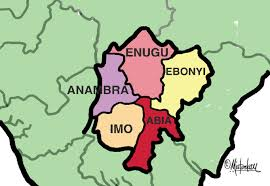
Meanwhile, a cross section of stakeholders in Enugu State, have lamented the absence of robust and coordinated South-East development within the 27 years of uninterrupted democratic rule.
They, however, commended the individual states in their achievements on infrastructure and human capital development in terms of providing skills for youths.
The stakeholders noted that the entire residents of the five states in the South-East should have fared well with interconnected service development that would make life seamless.
Speaking, the Chairman of Ndigbo Unity Forum (NUF), Chief Augustine Chukwudum, said that the absence of coordinated regional development remained worrisome.
Chukwudum noted that individual states in the zone had performed well in road infrastructure, urban renewal of metropolises and rural access roads to ameliorate suffering of the people but there was no connectivity of these infrastructure with other states.
According to him, till date, the zone do not have a coordinated zonal railway system, fibre backbone, gas supply pipeline and seaport among others, which are hallmarks of developed countries of the world.
He noted that large-scale well-planned agriculture gave the zone its major source of revenue before independence and profiled the zone as the fastest growing economy then.
“Agriculture is no longer functional because of lack of interest, latest technology, innovation and critical thinking of leaders on viable, sustainable and large-scale agricultural practices,” he said.
He noted that the assessment became imperative following backward development of a zone that was highly blessed with human and natural resources.
Corroborating, a public affairs analyst, Mr Camillus Ogbuagu, said that successive administrations in various South-East states might point to achievements in road construction, education, healthcare and security.
He also noted concerns about absence of large-scale and long-term projects.
Ogbuagu said that after 27 years of uninterrupted democratic governance, many people expected the region to have achieved greater economic transformation, industrialisation, modern agricultural development, and integrated infrastructure capable of driving long-term sustainable growth.
He said that residents of states in the region continued to face significant challenges, including high cost and inadequate transportation networks, rising food costs, epileptic power supply, high cost of rent and limited industrial capacity.
“Nevertheless, these national challenges should not be used by our leaders as excuses for underperformance. Instead, they should inspire innovation, collaboration, and creative solutions.
“Going forward, all elected officials in the South-East must take deliberate and coordinated steps to ensure meaningful and measurable progress across the region in order to uplift standards of living of millions of our people.
“Development should not be viewed solely from the perspective of individual states but through an integrated and regional lens such as what is obtainable in developed regions, countries and continents such as Great Britain, USA, Europe among others.”